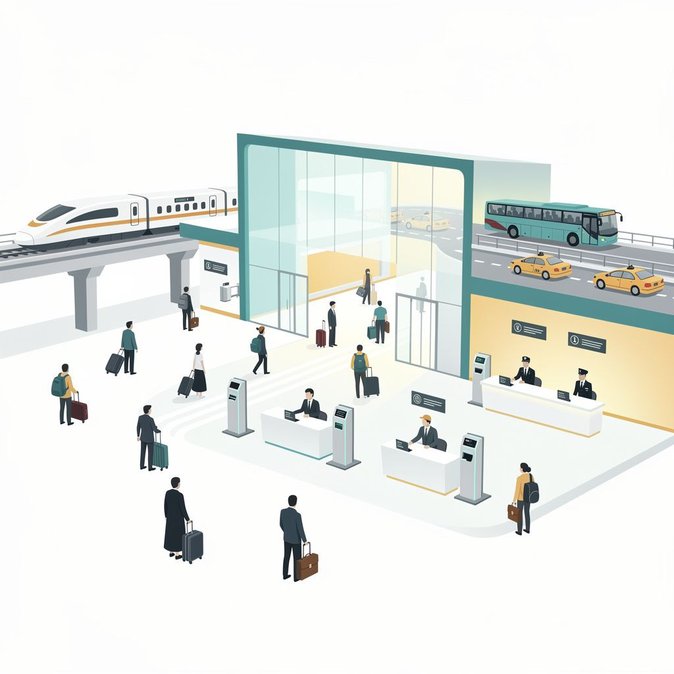
Just two days after its ribbon-cutting, the completely reconstructed Huanggang Port—re-branded as Shenzhen-Hong Kong Huanggang—handled 79,500 passenger trips and 8,000 vehicle crossings in its first 24 hours, Shenzhen border authorities said on 13 October. Roughly half the traffic was southbound into Hong Kong, validating forecasts that the new ‘collaborative inspection, joint clearance’ model would encourage spontaneous cross-border visits. Hong Kong’s Transport and Logistics Secretary Mable Chan told Commercial Radio the flow “met expectations” and confirmed extra bus frequencies will be laid on for the upcoming public holiday. Unlike the old terminal, the new port funnels passengers through joint counters where Hong Kong and Mainland officers operate side-by-side, cutting average clearance times to under five minutes. The real-time data dashboard, developed by the Electrical and Mechanical Services Department with Shenzhen’s Public Security Bureau, allowed dynamic allocation of e-channels and staff, preventing bottlenecks even during the evening peak. Traveller feedback gathered by the Hong Kong Tourism Board cited “airport-style” signage and availability of both Octopus and WeChat Pay for shuttle buses as major improvements. For companies relocating staff between Shenzhen’s tech parks and Hong Kong headquarters, the new port offers a viable alternative to the over-subscribed Lok Ma Chau spur line. HR departments should update travel policies to include Huanggang as an authorised crossing and brief employees on the joint inspection procedure, which differs from conventional sequential stamping. Looking ahead, authorities plan to pilot a green channel for electric cross-boundary coaches in 2027 and expand the freight terminal to support cold-chain logistics—developments that could further reshape mobility patterns within the GBA.
Source: The Standard