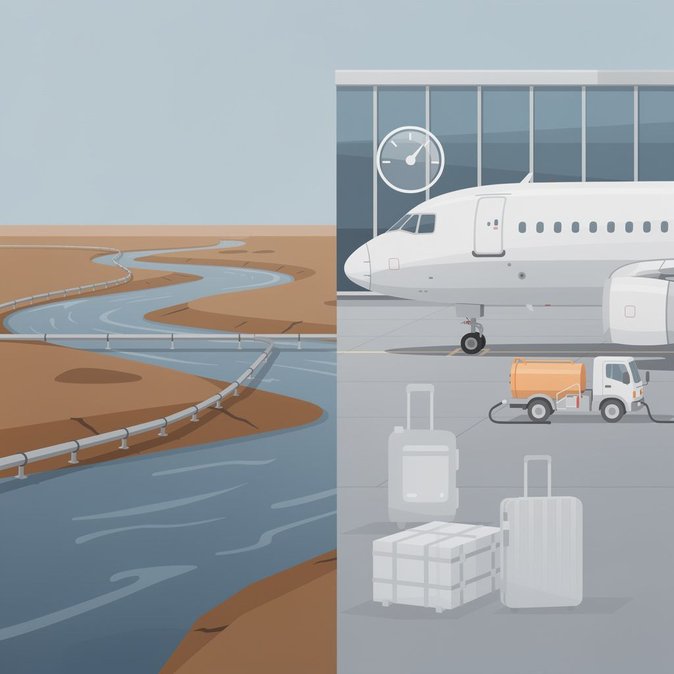
Lufthansa has instructed crews on selected short- and medium-haul flights to ‘tanker’ additional jet fuel before landing in Frankfurt, after pipeline maintenance and low Rhine water levels tightened kerosene supplies at Europe’s fourth-busiest airport. The measure was disclosed on 15 October and is expected to last several days. Fraport, the airport operator, insists overall operations remain stable thanks to large on-site storage tanks and diversified deliveries by rail and road. Nonetheless, the episode is a reminder of how vulnerable hub airports can be to supply-chain hiccups—particularly for commodities like aviation fuel that rely on single-pipeline logistics. For corporate travel managers the good news is that Lufthansa does not anticipate cancellations; schedules and passenger loads should run as planned. However, ‘tankering’ increases aircraft weight and may lead to sporadic payload restrictions, notably for high-demand cargo routes. Freight forwarders moving just-in-time components through Frankfurt should monitor consignment updates closely. The airline’s contingency plan dovetails with EU Fit-for-55 sustainability rules: despite the extra uplift, Lufthansa says overall CO₂ impact will be offset under its existing Sustainable Aviation Fuel (SAF) programme. The carrier has pledged to resume normal refuelling procedures once the 60-kilometre Mittelrhein pipeline returns to full capacity, expected early next week. While the risk to passenger itineraries is minimal, the incident highlights the importance for mobility teams to maintain real-time alerts on infrastructure issues affecting major gateways—be they strikes, weather events or, as now, supply constraints.
Source: Tagesschau