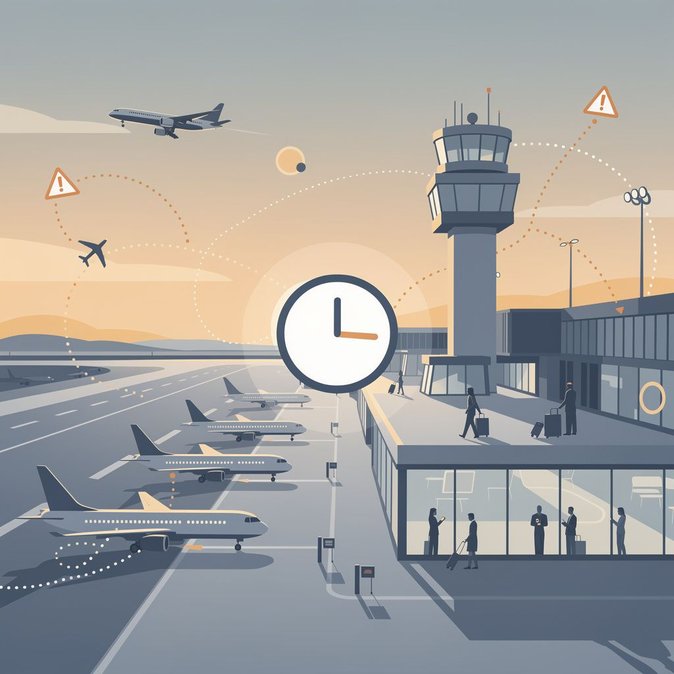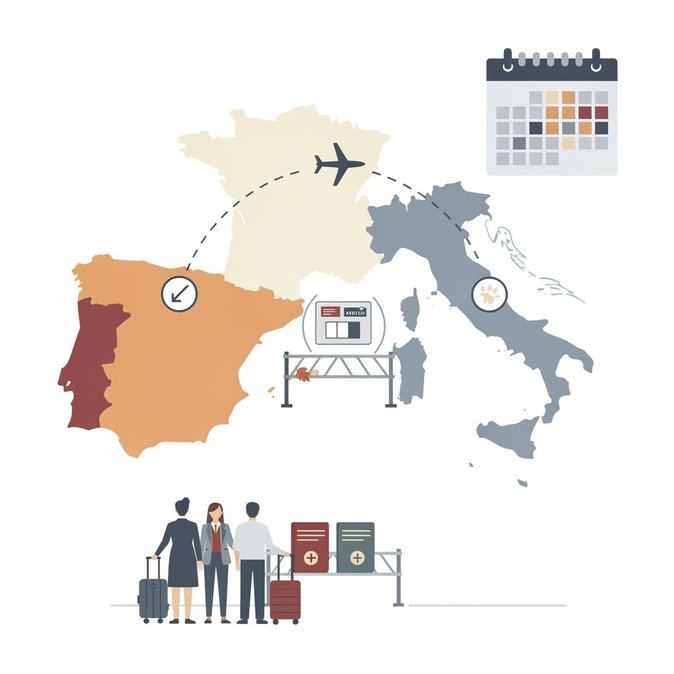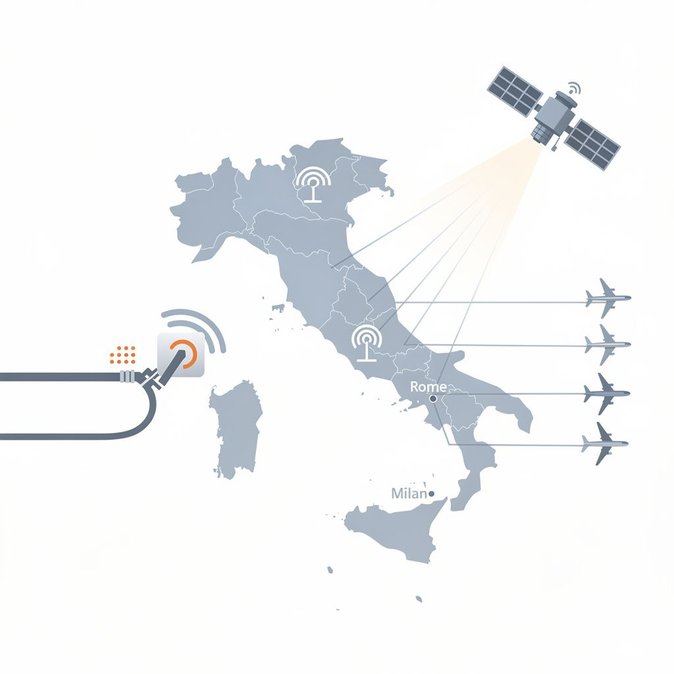
Italy’s civil air-navigation authority ENAV confirmed on Friday morning that the country’s entire air-traffic control (ATC) system is back to 100 % capacity after an overnight failure in the primary data-transmission network briefly halved the volume of flights that could be handled in Italian airspace. The outage, which began shortly after 02:00 UTC on 16 October, affected radar data feeds and the exchange of flight plans between area-control centres in Rome, Milan, Brindisi and Padua. ENAV says the safety of flights was never compromised, but to maintain separation standards it ordered an immediate 50 % traffic-reduction scheme. Long-haul arrivals were forced to reduce speed or enter holding patterns, while departures from key airports such as Rome Fiumicino (FCO), Milan Malpensa (MXP) and Bergamo (BGY) were metered at 12-to-15-minute intervals. Engineers switched the system over to a secondary satellite backbone shortly after 06:00 UTC, allowing traffic levels to climb steadily through the morning peak. By 09:30 UTC ENAV declared “full operational recovery,” stressing that preliminary diagnostics rule out a cyberattack and point instead to a hardware fault in a Naples relay station. Airlines reported knock-on delays of between 30 minutes and three hours; low-cost carrier Ryanair cancelled 18 flights, while ITA Airways re-routed two trans-Atlantic arrivals to Venice to free capacity at FCO. Business-travel managers should expect residual disruption throughout Friday as aircraft and crews reposition. Travellers connecting onward to long-haul flights are urged to allow extra time and monitor airline apps. While ENAV’s rapid restoration showcases the resilience of Italy’s dual-network architecture, the incident has renewed calls from trade group IATA for accelerated investment in the €2 billion Single European Sky ATM upgrade programme, warning that Europe’s fragmented ATC infrastructure remains a weak link for multinational corporations that rely on predictable travel schedules. For corporate mobility teams the key takeaway is contingency planning: include buffer times in Italian itineraries over the next 48 hours, reconfirm meetings, and remind travellers to keep boarding passes and receipts should they need EU261 compensation for long delays.
Source: AP News