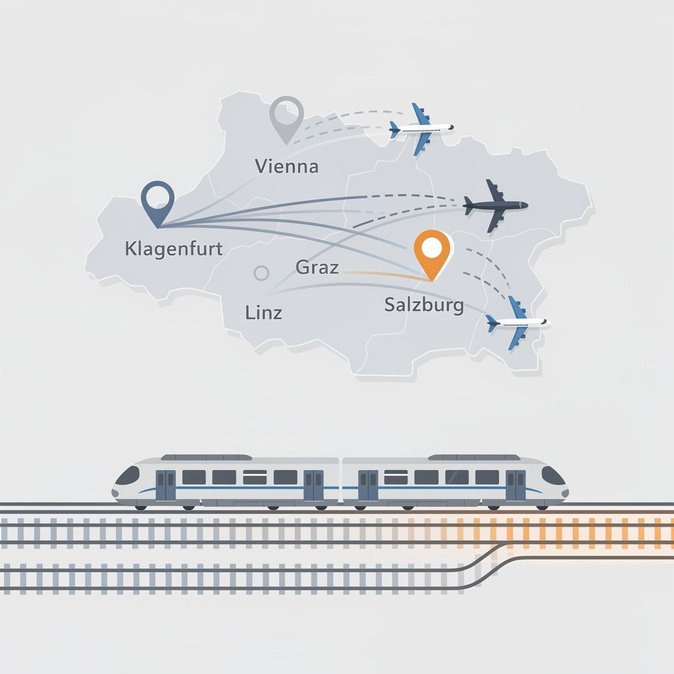
Travellers transiting through Austria this winter will face a slimmer route map. An analysis by News.at published on 19 October 2026 shows that Ryanair will withdraw four of its 16 Vienna-based aircraft and scrap ten destinations—including Lanzarote, Copenhagen, Riga and Tel Aviv—when the winter timetable starts on 25 October. The Irish low-cost carrier blames Austria’s €12 passenger tax and rising ATC and airport fees for the pull-back, warning that jobs could be lost if charges are not reviewed. Regional airports are also hit: Ryanair is cancelling its Stansted services from Linz and Klagenfurt, while Austrian Airlines (AUA) will fly the last Graz–Vienna domestic hop on 23 October, citing poor economics. The cut severs one of Austria’s few remaining internal air links; business travellers from Styria will have to rely on ÖBB AirRail trains to reach Vienna International for long-haul connections. Not all the news is negative. Salzburg gains twice-weekly flights to Rome and Pristina, and AUA will increase frequencies to Amman and restore its Dubai service on 12 December using a fuel-efficient A320 neo. The carrier will also operate up to 14 weekly rotations to Tel Aviv, indicating confidence in Middle East demand once security stabilises. For corporate mobility programmes the changes mean revisiting travel policies and connection times. Passengers booked on cancelled services are entitled to refunds or rerouting under EU 261; however, compensation is payable only if notice is under 14 days. Companies should audit existing PNRs, brief travellers on rail alternatives and consider contracting with other Star Alliance hubs—Frankfurt, Munich or Zurich—for itineraries that previously connected via Vienna. The shake-up again spotlights Austria’s passenger tax, set at €30 for sub-350 km flights—among the highest short-haul levies in Europe. The Vienna Airport Group and the provinces of Vienna and Lower Austria have renewed calls for a reform, arguing that the tax imperils the hub’s competitiveness just as the Entry-Exit-System and ETIAS add new frictions for third-country visitors.
Source: News.at