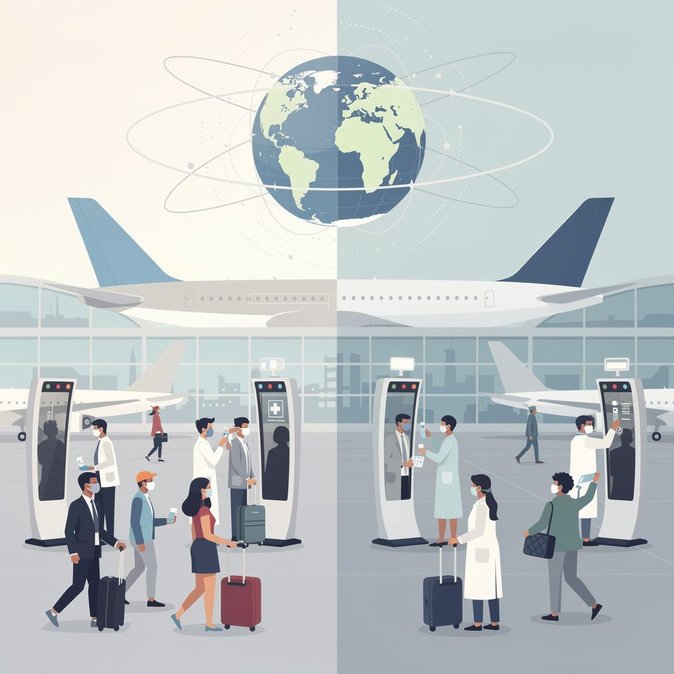
A University of Hong Kong (HKU) study published on 22 July argues that intensive pathogen surveillance of transit passengers at just two aviation megahubs—Hong Kong International Airport and Abu Dhabi’s Zayed International—could shave three days off the global detection time for emerging virus strains. Lead author Professor Leo Poon told local radio that samples from selected connecting passengers would provide a real-time snapshot of worldwide viral traffic because the two hubs sit astride key East-West routes. Early detection, he said, allows governments to fine-tune entry protocols “before small outbreaks mushroom into billion-dollar travel shutdowns”. For Hong Kong, the findings reinforce the government’s push to re-brand the airport as an “International Health Station” under the city’s Air-Transport Sustainable Hub blueprint. Airport Authority executives confirmed that negotiations are under way with airlines to embed voluntary saliva swabbing in premium-lounge services for frequent flyers—an initiative that could appeal to corporate travellers wary of future disruptions. Public-health specialists welcome the cost-effectiveness of the model: instead of blanket testing thousands of arrivals, labs would focus on statistically significant transit cohorts. The approach could save Hong Kong’s Department of Health an estimated HK$120 million a year compared with the universal PCR regime briefly imposed during the 2022-23 Covid-19 era. Implementation hurdles remain. Privacy advocates warn that anonymised genomic data might still be traceable to individuals, while airline operations teams fear boarding-gate delays. Yet multinationals with large expatriate populations in Hong Kong are already updating crisis-response plans to reflect the study’s emphasis on ‘hub-based bio-surveillance’.
Source: South China Morning Post