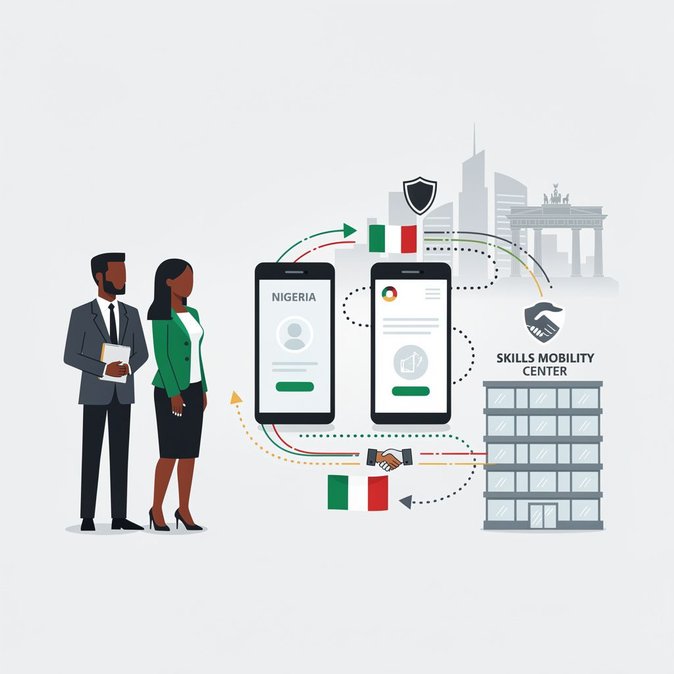
During a meeting in Abuja on 22 July, Nigeria’s foreign minister Bianca Odumegwu-Ojukwu and her German counterpart Annalena Baerbock reaffirmed the countries’ strategic partnership. The joint communiqué puts mobility at its core: Berlin pledged additional staff for the overloaded visa section in Lagos and support for an electronic appointment system that should halve waiting times for work and student visas by early 2027. Germany will also open a pilot ‘Skills Mobility Centre’ in Abuja this autumn, modelled on similar hubs in India and Brazil. The centre will pre-screen candidates for Germany’s new opportunity card and provide German language training up to B1 level, funded by the German development agency GIZ. In return, Nigeria committed to accepting charter flights for citizens scheduled for return under EU readmission rules and to intensify joint investigations against trafficking networks. For German companies active in West Africa, the deal promises smoother intra-company transfers. Siemens Energy said it plans to relocate 150 Nigerian engineers to its Berlin turbine plant next year and welcomed the “clear timeline for visa digitalisation”. Mobility consultancies note that Germany is quietly shifting from a purely defensive readmission focus to a “migration diplomacy” model that offers legal pathways in exchange for cooperation on returns—an approach Brussels encourages under the new EU Talent Partnerships. The next step is a bilateral implementation protocol, due to be signed in Berlin in September, which will detail quotas for apprenticeships, nursing staff and IT specialists. Employers should watch for publication of the quota list and prepare documentation (qualification assessments, labour-market approvals) well in advance, as demand is expected to exceed supply.