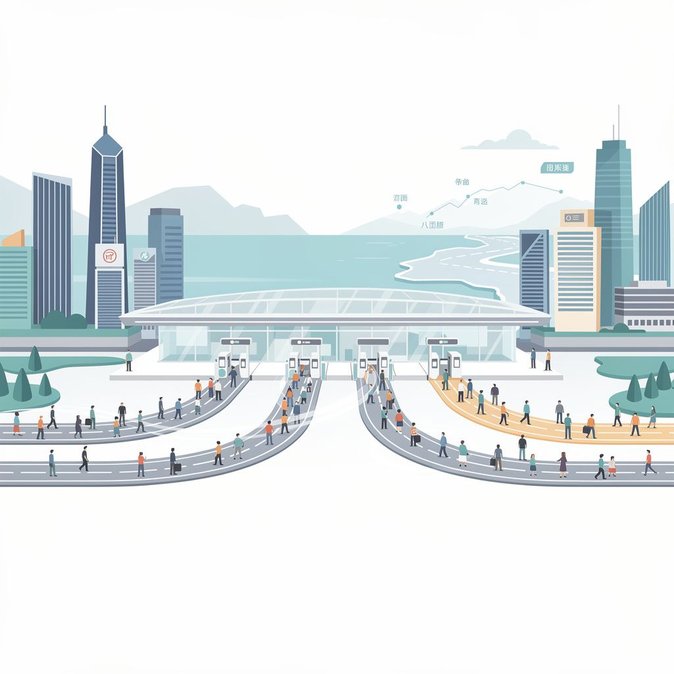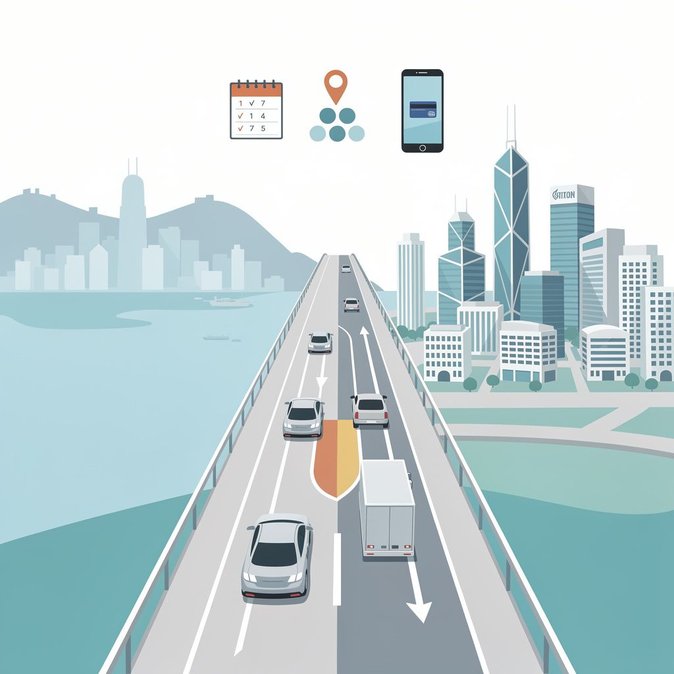
The 2026 Policy Address devotes an entire section to cross-boundary land transport, promising to ‘improve the travel booking and renewal arrangements’ of the year-old Northbound Travel for Hong Kong Vehicles (NBT) scheme and to ‘steadily expand Southbound Travel for Guangdong Vehicles (SBT) to all cities in the province’. Under NBT, Hong Kong private cars can self-drive into Guangdong via the Hong Kong-Zhuhai-Macao Bridge without a Mainland quota. While uptake has been strong—over 65 000 permits issued—users complain about limited booking windows and steep penalties for missed slots. The government now says it will introduce a grace-period mechanism, automate date swaps via the booking portal and pilot multi-entry validity for frequent commuters. For the reciprocal SBT arrangement, currently restricted to Shenzhen and Zhuhai vehicles entering Hong Kong, the Transport-Housing Bureau will work with Guangdong to phase-in applications from the remaining 19 prefecture-level cities by 2028. A common e-payment platform for tolls and insurance is also on the cards, along with unified vehicle-inspection standards to cut paperwork. The enhancements are crucial for businesses that maintain factories across the border and executives who shuttle between Hong Kong headquarters and GBA plants. Logistics firms anticipate smoother last-mile runs, while HR teams see scope to replace chauffeur services with self-drive assignments, trimming mobility budgets. Companies should brief employees on forthcoming rule changes and watch for the updated penalty matrix: repeated no-shows could still trigger a three-month ban once the new system beds in, though first-offence suspensions are set to be scrapped.