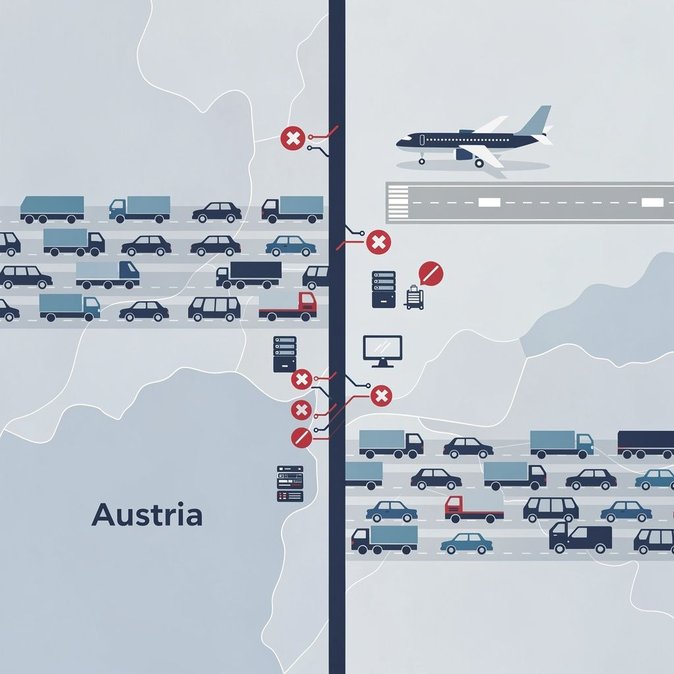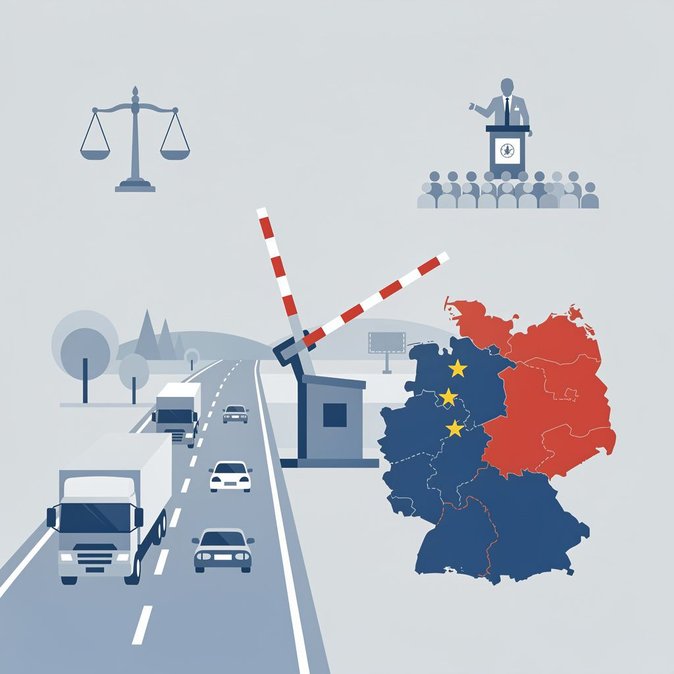
Just hours after Austria’s latest six-month border-control period took effect, domestic debate over its legality has intensified. Investigative outlet ZackZack published a detailed report on 18 September highlighting successful court challenges against both Austrian and German controls and quoting constitutional lawyer Hubert Niedermayr, who called the decade-long ‘temporary’ regime a breach of fundamental EU freedoms. Niedermayr, whose 2019 case at the Spielfeld crossing led to the European Court of Justice declaring protracted controls unlawful, argues that Vienna is ignoring judicial rulings by repeatedly extending measures on the same security grounds. He has now filed a fresh complaint, accusing policymakers of placing “party-political interests above basic rights”. Significantly, Foreign Minister Beate Meinl-Reisinger told the paper that she has reached an understanding with the Interior Ministry to begin dismantling at least some stationary checkpoints in favour of risk-based mobile policing inside the border zone. Although no formal timetable has been announced, the statement marks the first time since 2015 that a senior member of government has spoken of scaling the system back. Business groups have welcomed the possibility. The Federation of Austrian Industries estimates that permanent controls cost exporters up to €50 million a year in lost productivity through longer truck turn-arounds alone. Tourism bodies add that uncertainty at low-traffic crossings in Burgenland and Styria deters same-day visitors from Hungary and Slovenia. Whether political will matches legal pressure remains to be seen. Any partial relaxation will still have to coexist with Germany’s newly extended checks, meaning travellers heading north will encounter scrutiny regardless. Companies should therefore continue current compliance routines but monitor ministerial statements for a phased shift to roving spot checks that could ease congestion at key freight corridors such as the A4 and the A9.
Source: ZackZack