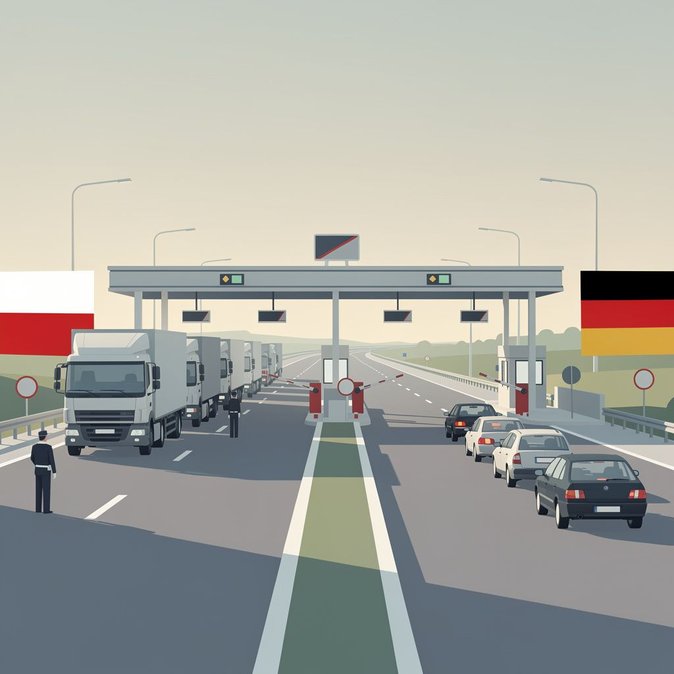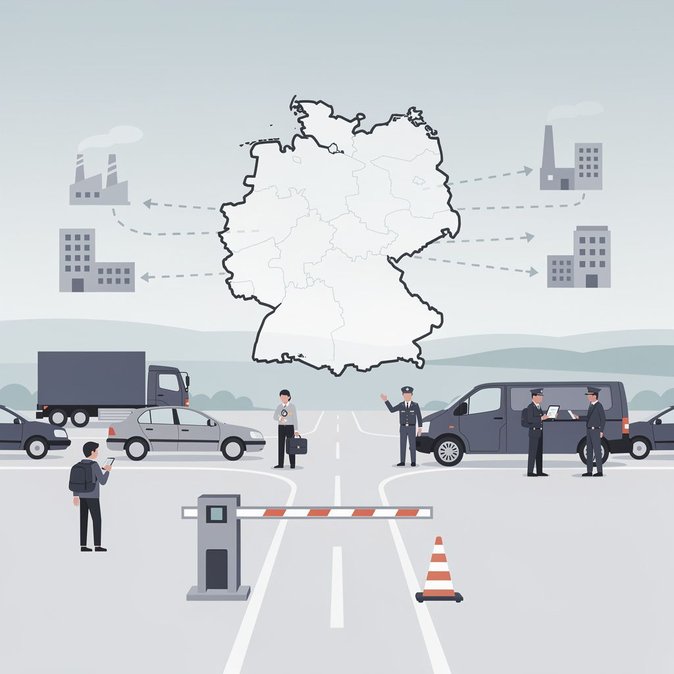
Queues of cars, delayed commuter trains and disgruntled local politicians dominated the morning rush-hour on September 21, when drivers approaching the Europabrücke between Strasbourg and Kehl again found themselves stuck in spot-checks by Germany’s Federal Police. The government in Berlin has decided to prolong the temporary re-introduction of controls at all German land borders for another six-month period, this time until 15 March 2027. According to the EU’s Schengen monitoring register, the measure is justified by “continued serious threats to public security… posed by high levels of irregular migration and migrant smuggling.” While the Interior Ministry argues that the controls are an essential “last-resort” tool, politicians on both sides of the Upper Rhine warn of mounting economic damage. Kehl’s independent mayor Wolfram Britz told SWR that jams at the bridge hurt cross-border trade and the integrated ports of Kehl and Strasbourg, and that delays of up to 20 minutes for trams and regional trains are becoming routine. Strasbourg’s deputy mayor for European Affairs, Hervé Moritz, called the border a “hard line in what should be a single living space.” Business groups echo the criticism. The Franco-German Chamber of Commerce estimates that 60,000 frontier workers cross daily between Baden-Württemberg and Alsace; every extra minute at the border costs companies an estimated €1 million a month in lost productivity and logistics penalties. Transport operators report having to rewrite timetables twice this year alone to build in buffer time. Berlin counters that the number of unauthorised entries detected on the southern and eastern corridors has fallen by almost 30 % since selective checks were expanded to the Franco-German frontier in 2024, and says that 4,200 human-smuggling attempts were disrupted in the first eight months of 2026. Nevertheless, pressure is growing inside the governing coalition to replace blanket extensions with a more data-driven, risk-based model once the current term expires in March. In practical terms, travellers should plan for possible ID checks on all road and rail crossings from France, Luxembourg, Belgium, the Netherlands, Denmark, Austria, Switzerland, the Czech Republic and Poland, and allow extra connection time. Companies operating commuter shuttles or just-in-time supply chains are advised to conduct route-mapping exercises and brief mobile workers on acceptable identification documents to avoid fines or refusals of entry.