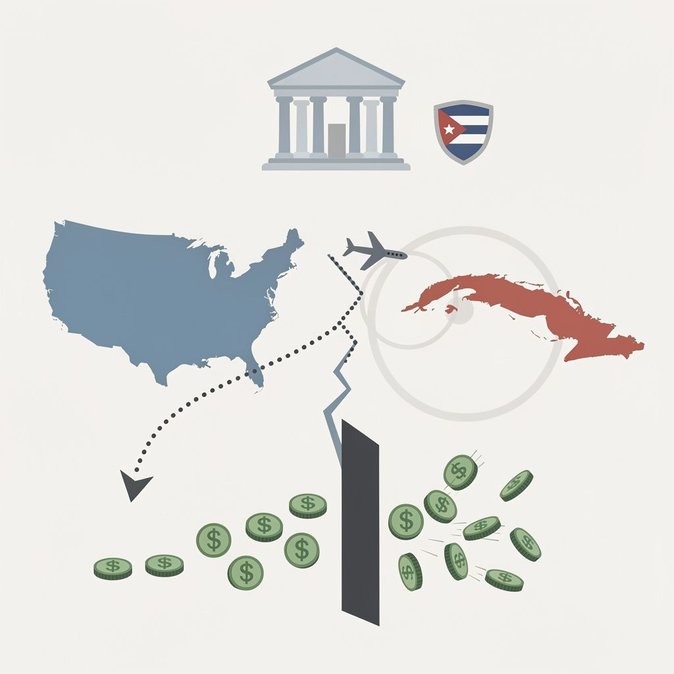
On September 30, 2026 the Treasury Department’s Office of Foreign Assets Control (OFAC) unveiled sweeping amendments to the Cuban Assets Control Regulations (31 CFR §515). The final rule implements National Security Presidential Memorandum-5 (2025) by prohibiting indirect as well as direct financial transactions with entities on the Cuba Restricted List and scrapping several long-standing general licenses that had sustained limited business and academic mobility. Most notably for the mobility community, OFAC has: • Eliminated the general license for – Group people-to-people educational travel, and – Professional meetings or conferences in Cuba. • Re-imposed an escort requirement for nearly all educational activities, meaning travelers must be accompanied by an approved U.S. organization representative. • Ended “U-Turn” transactions, forcing U.S. banks to reject rather than process dollar transfers that merely pass through the U.S. financial system en route between foreign banks and Cuban parties. • Barred both direct and indirect payments involving entities on the Restricted List, closing a loophole frequently used by travel agencies and academic programs. A 30-day grandfather window allows individuals already in Cuba under the former licenses to finish trips by October 30. Otherwise, U.S. persons must now obtain specific OFAC licenses or fit within the remaining, far narrower categories such as family visits, official government business or humanitarian projects. Corporate mobility teams should halt plans for incentive meetings, market-research visits or academic exchanges unless they qualify under the revised rules. Treasurers must update payment screening filters immediately; even routing a supplier payment through a third-country bank that touches a blocked Cuban entity could trigger civil or criminal penalties. Travel managers should flag any reservations issued before September 30 and verify whether they qualify for the grandfather clause. Taken together with existing State Department restrictions on lodging and the Transportation Security Administration’s cap on charter flights, the OFAC amendments effectively return Cuba travel policy to a pre-2011 posture. Businesses with Cuban operations—energy services firms, telecom providers and travel companies in particular—will need fresh compliance reviews and may consider relocating staff to third-country hubs to avoid inadvertent violations.
Source: Federal Register