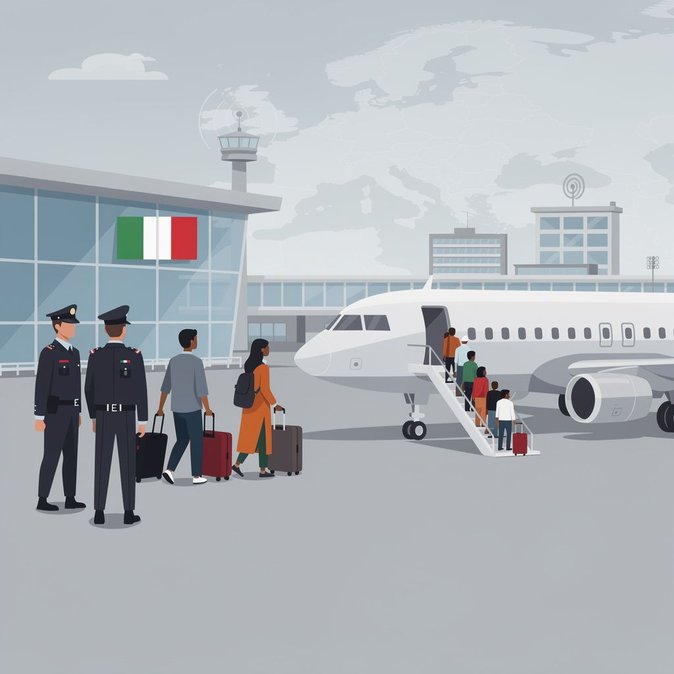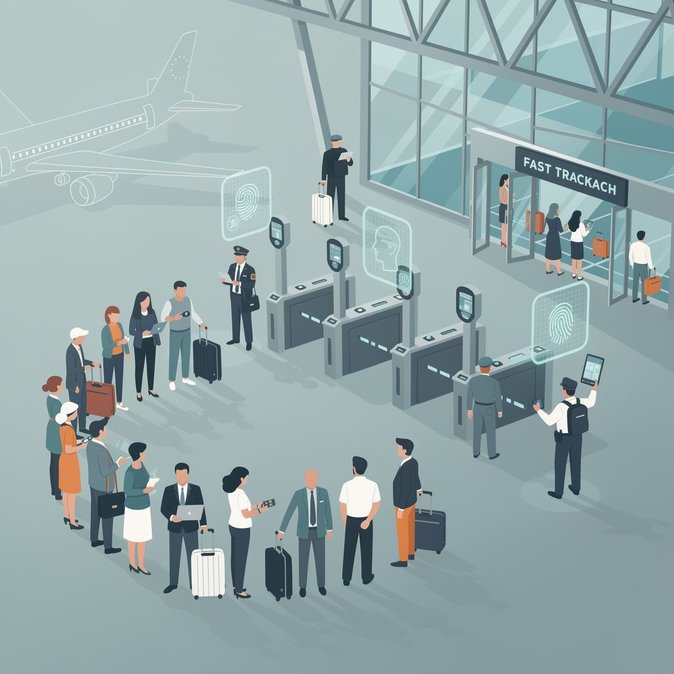
Italy’s major hub airports—including Rome Fiumicino, Milan Malpensa and Venice Marco Polo—have thrown their weight behind a six-point reform plan unveiled on 14 October by Airports Council International-Europe (ACI Europe) and Airlines for Europe (A4E). Six months after the EU Entry/Exit System (EES) became fully operational, the trade bodies say queues for third-country nationals routinely exceed two hours and can peak at five. The plan asks the European Commission and national authorities to eliminate duplicate fingerprint/face scans, prevent the creation of multiple traveller profiles, accelerate installation of automated e-gates and give border police permanent power to suspend biometric capture when lines become unmanageable. For Italian operators the issue is acute: Fiumicino handled 4.2 million non-EU passengers this summer and reported that EES processing added an average 45 minutes per arrival during peak weekends. Ground-handling consortium Assaeroporti warned that “mis-managed technology is becoming a business-risk variable on a par with weather disruption”. Airlines such as ITA Airways and easyJet have had to re-bank evening departures to preserve minimum connection times, increasing costs and eroding punctuality scores. Italian border police support some of the industry’s requests. A senior officer told Il Messaggero that the ad-hoc power to waive biometric capture—granted temporarily by the Commission—was used at Fiumicino on 11 separate days in August. Making that flexibility permanent, he said, would allow resources to be redeployed to secondary airports such as Bari and Catania, where summer staffing is thinner. From a corporate-mobility perspective, the stakes are high. Multinational firms operating rotational assignments in Italy have reported missed onward flights and extra hotel nights, driving up travel budgets. Travel-management company CWT advises clients to schedule at least four hours between Schengen-external flight connections at Italian hubs until improvements bed in. If the Commission adopts the ACI/A4E blueprint, airports could move much faster toward a “one-stop” model in which biometric data is captured once—ideally pre-departure—then reused across the Schengen perimeter. In the meantime, employers should brief assignees and short-term business travellers on longer dwell times at immigration and the possibility that electronic gates may be unavailable even for passport holders who already enrolled in the system. Contingency planning—such as flexible hotel rates and changeable airfares—remains advisable until the EES stabilises.
Source: Biometric Update