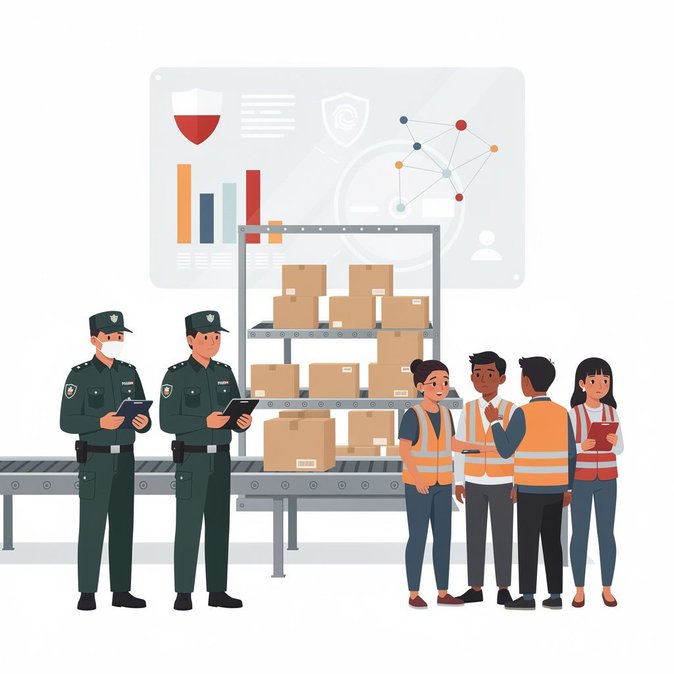
Officers from the Częstochowa station of Poland’s Border Guard concluded a targeted employment inspection on 21 October that revealed 35 foreign nationals working without the necessary permits. The group comprised 16 Indonesians, nine Indians, six Nepalese, two Pakistanis and two Colombians, all employed by a Polish national in the local logistics sector. According to the official statement, several workers had overstayed visas or entered visa-free but never regularised their status. The employer faces fines for both engaging foreigners without permits and failing to provide written contracts within statutory deadlines. The migrants themselves were issued administrative decisions obliging them to leave Poland and banning re-entry into the Schengen Area for periods of up to five years, depending on individual overstay lengths. The case highlights Poland’s tougher stance on labour-market abuses since the change of government in January. The Interior Ministry has quadrupled workplace raids in 2026, arguing that uncontrolled third-country recruitment distorts wages and fuels unregistered migration. While large multinationals usually outsource compliance to specialist providers, smaller subcontractors in warehousing and last-mile delivery remain high-risk. Mobility managers should note that the Border Guard now cross-checks social-security filings with EES border-crossing data and the new national work-permit registry. Any mismatch between declared employment and legal stay triggers an automatic inspection flag. Companies are therefore advised to audit subcontractors, ensure every foreign hire signs an employment contract in writing within the required seven days and keep digital copies ready for spot checks. Failure to do so can lead not only to fines but also to suspension of simplified work-permit quotas—an increasingly valuable asset in Poland’s tight labour market. The Częstochowa raid serves as a timely reminder that immigration-compliance risk sits far beyond the HR desk and should be addressed across procurement and supply-chain functions.
Source: Komenda Główna Straży Granicznej