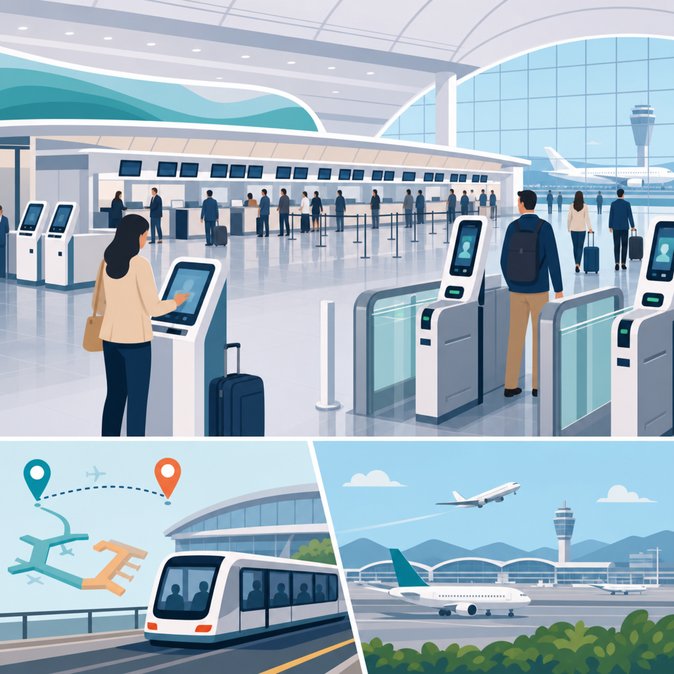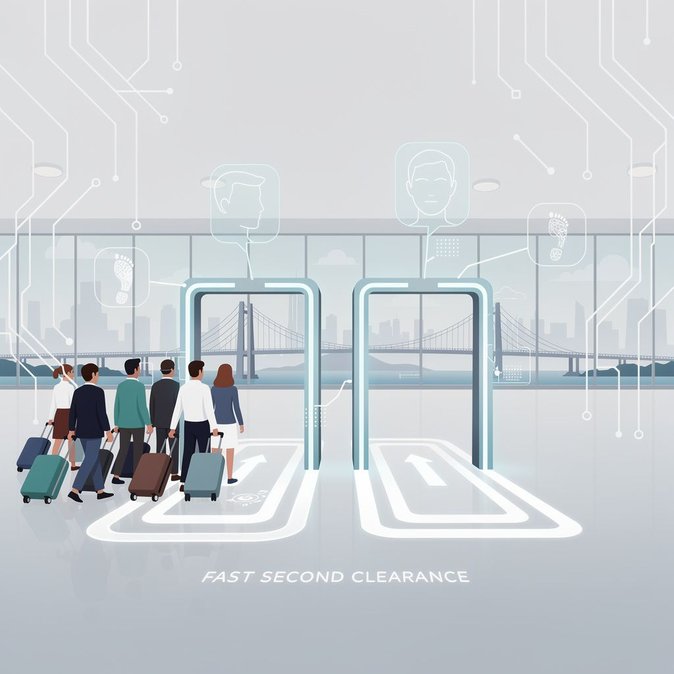
Hong Kong’s Immigration Department has confirmed that the territory’s first fully contact-free immigration lanes will go live at the Hong Kong-Zhuhai-Macao Bridge (HZMB) on 25 June. The pilot, branded “Seamless e-Channel”, uses five high-definition cameras embedded along each lane to capture a traveller’s gait and facial features while they walk at normal speed. Artificial-intelligence matching software then cross-checks the images against the department’s encrypted database and opens the exit gate automatically—cutting total clearance time to around five seconds. Travellers keep passports in their pockets and do not pause to scan a QR code. The gates shut only if an anomaly is detected, triggering human intervention. Officials say accuracy exceeded 99 per cent in trials. Eligibility is initially limited to some 50 000 Hong Kong permanent residents aged 11 or above who have used the bridge at least ten times in the past 90 days. These frequent users can enrol through the ImmD mobile app and will see their profiles pre-loaded before launch day. The department expects usage to scale quickly: about 14 million passenger trips were recorded via the HZMB in 2025, and nearly one-quarter were made by regular commuters. The HZMB pilot fulfils a pledge in Chief Executive John Lee’s 2025 Policy Address to begin phasing out physical document checks at the city’s busiest land and sea crossings. If performance data stay positive, ImmD plans to retrofit conventional e-channels at Shenzhen Bay, Lok Ma Chau Spur Line and the high-speed-rail terminus in West Kowloon. Each replacement channel costs roughly HK$3 million—about one-third less than a standard staffed booth. For companies moving staff between Hong Kong, Macao and Guangdong, the upgrade promises measurable productivity gains. Cross-border shuttle-bus operators anticipate that cutting average queue times by even ten seconds could save more than HK$5 million a year in fuel and labour. Logistics firms are also lobbying for a freight-vehicle adaptation; drivers currently remain on board while officers scan documents manually. Travellers should note that they must still comply with any mainland or Macao health declarations. However, Hong Kong officials say they are working with their counterparts in Zhuhai to pilot a shared “collaborative inspection” data layer that would allow both sides to read a single biometric profile, further reducing friction. If the scheme succeeds, it could become the blueprint for a next-generation Greater Bay Area mobility corridor—in line with Beijing’s push for a 60-minute “living circle” across the region.