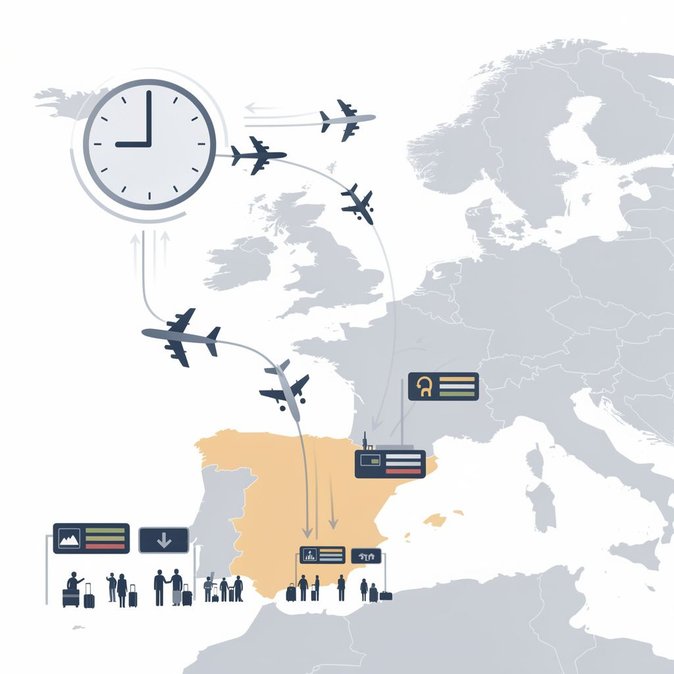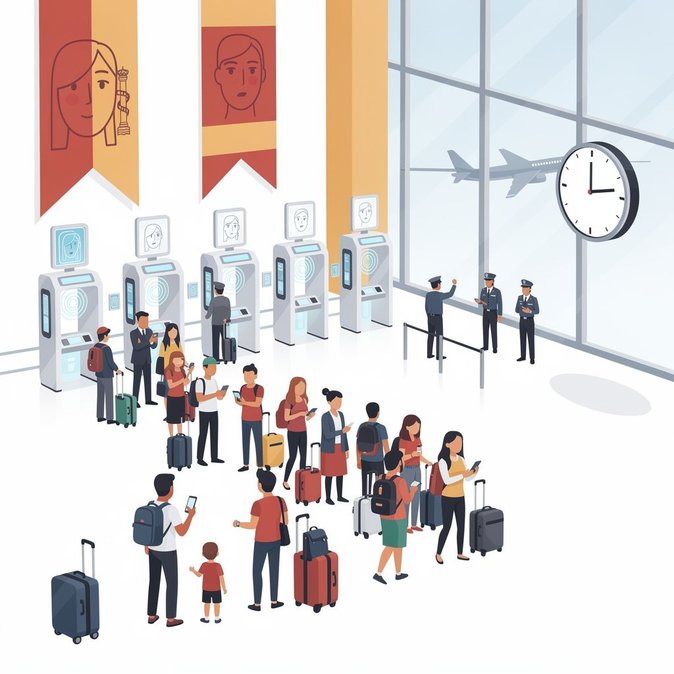
Spain’s Confederation of Travel Agencies (CEAV) has called on the Interior Ministry and airport operator Aena to deploy more border-police officers after waits of up to two hours were reported at several airports on 12 June, the first Friday of full Entry/Exit System (EES) operation. CEAV’s legal director Ana Barluenga warned that long queues risk damaging Spain’s image in key markets such as the UK and could lead to missed connections at hubs like Madrid-Barajas and Palma de Mallorca. Industry bodies in the Balearics echoed the plea, citing April incidents where biometric kiosks failed and manual back-ups were insufficient. Under the EES, non-EU travellers have fingerprints and facial images captured on arrival and departure. While the system enhances security, it also doubles the processing time per passenger if kiosks or e-gates malfunction. Agencies propose flexible staffing models that allow officers to switch between manual passport stamping and biometric supervision as queues build. For corporate mobility teams, the advisory means adjusting airport arrival guidance, especially for early-morning flights when staffing levels are thin. Employers should also remind travellers that children under 12 are exempt from fingerprinting, potentially allowing families to use dedicated fast-track lanes where available. The Interior Ministry says a task-force will review queue-length data this week and stands ready to authorise overtime or redeploy staff ahead of the late-June rush. Meanwhile, airlines are trialling push notifications that alert passengers when estimated queue times exceed 45 minutes, giving them a chance to shift to earlier transport to the airport.
Source: Hosteltur