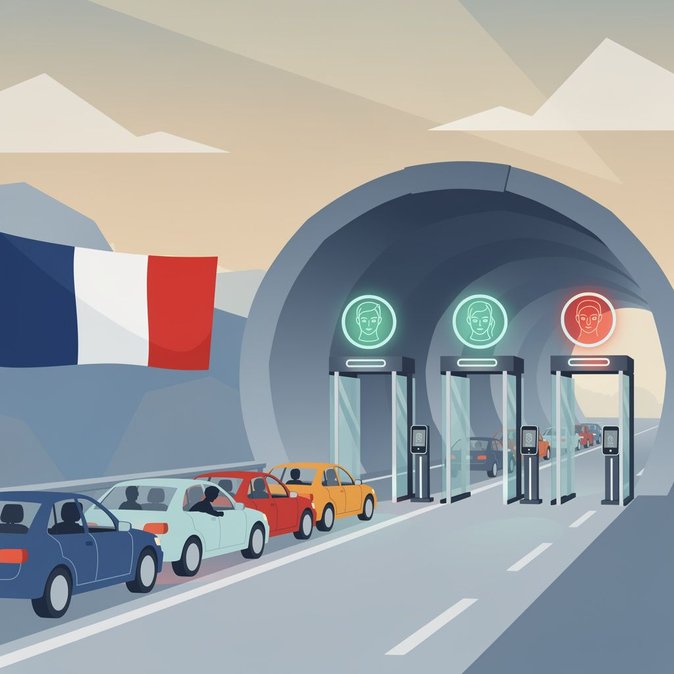
Channel Tunnel operator Getlink sounded the alarm on 23 July after fresh tests showed that the European Entry/Exit System’s (EES) car-passenger module is still not stable just six weeks before full enforcement is due on 6 September. The Paris-based group told reporters that the central EU software responsible for capturing biometric data in the tunnel’s drive-through kiosks is "not yet fully reliable," raising the prospect that mandatory fingerprint and facial-image checks could be postponed or rolled out in a more gradual fashion. EES has been live at France’s airports and seaports since April, replacing manual passport stamping for all non-EU travellers with an automated register of entries, exits and overstays. While the system has performed reasonably well for foot passengers, integrating it with car traffic at the unique, Franco-British tunnel terminal has proved far more complex. Car drivers will have to park, enrol their biometrics and then re-join the boarding lanes—a process Getlink estimates will take at least 70 seconds per vehicle, versus 25 seconds today. Getlink has invested €80 million in new kiosks, staffing and lane reconfiguration, but chief executive Yann Leriche stressed that the company cannot control the pace of EU software fixes. British tourism bodies fear gridlock at peak holiday weekends unless problems are resolved quickly; French officials counter that failing to implement EES uniformly would undermine Schengen security. Airlines and ferry operators are watching closely, because any deferral for the tunnel will increase pressure on their own border-control resources. For corporate mobility managers the uncertainty complicates August assignment planning. Many firms had already advised travellers to allow an extra hour at Eurotunnel terminals from mid-August; some are now booking critical staff via air or ferry instead, despite higher costs and France’s tightened capacity at ports. If the EU grants a further grace period, however, companies could find they have over-invested in contingency plans. Either way, Getlink’s call for clarity underscores how France’s border-modernisation drive is still a work in progress—and how software reliability, not hardware investment, may ultimately decide whether the Schengen area’s flagship security reform delivers smoother or more chaotic journeys.
Source: Reuters via Euronext Live