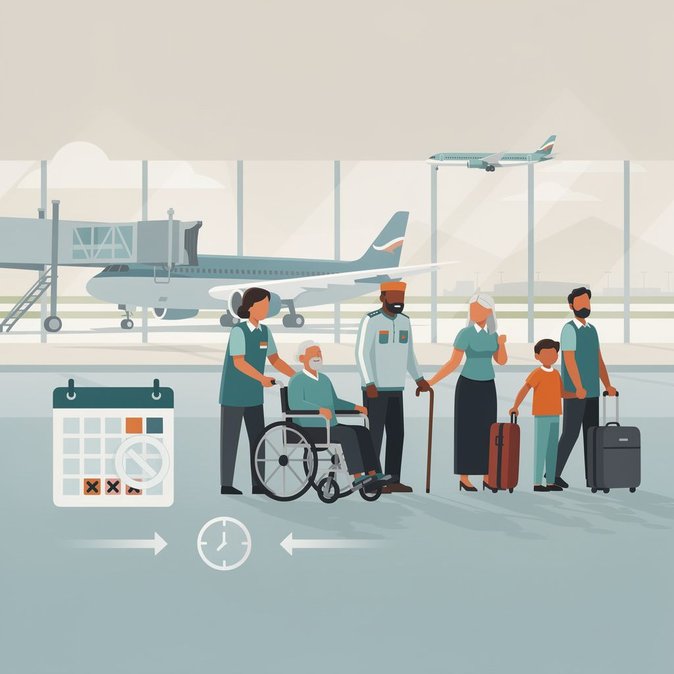
Prospects of travel disruption at London Gatwick eased on 14 September 2026 when the Unite union called off two five-day strikes by 220 Passenger Service Assistants employed by Wilson James. The workers—responsible for helping travellers with reduced mobility board and disembark aircraft—were due to walk out between 17–21 and 23–26 September. Following eleventh-hour negotiations, Wilson James tabled a fresh wage proposal “significantly better” than the sub-inflation offer previously rejected by staff. Unite has paused industrial action to allow a member ballot, the results of which are expected on 19 September. Although the affected group represents a small proportion of Gatwick’s 4,000-strong labour force, the threatened walk-outs risked cascading delays during a peak business-travel period. Airlines often need wheel-chair lifts to turn aircraft, and Civil Aviation Authority rules require airports to guarantee assistance within set time limits. Previous strikes in July caused average aircraft turn-times to increase by seven minutes and forced carriers to re-allocate cabin crew to manual lifts. Corporate travel managers whose itineraries transit Gatwick should nonetheless build contingency time into schedules until the ballot concludes. Should members reject the offer, the original strike dates could be reinstated with only seven days’ notice. Airlines have begun drafting voluntary staff for standby shifts and liaising with private assistance contractors as a precaution. The episode highlights the growing trend of labour unrest at UK hubs as inflation outpaces wages. Heathrow ground-handlers, Border Force officers and security screeners all have pay negotiations scheduled before year-end—issues mobility teams will need to track closely.
Source: V2 Radio