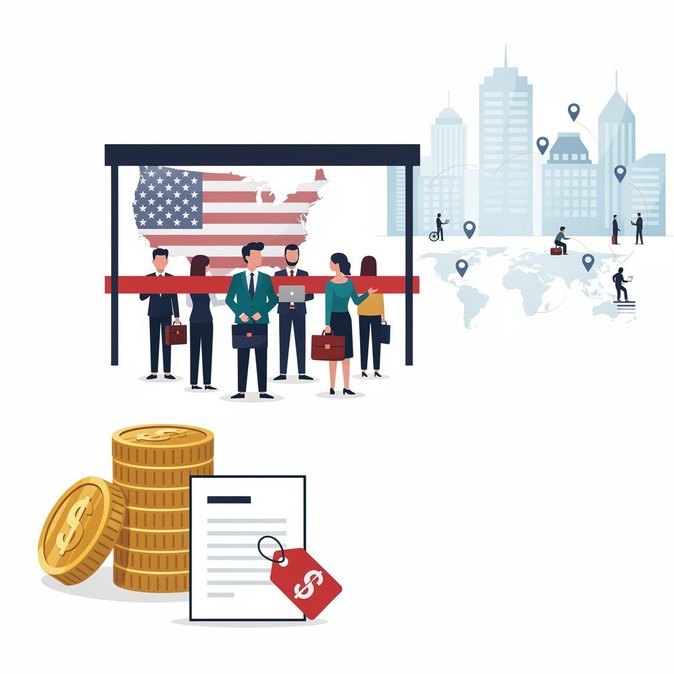
President Donald J. Trump on September 18 signed a proclamation extending for 12 months the controversial 2025 rule that bars most new H-1B entrants unless the sponsoring employer pays a US$100,000 supplemental fee. The White House argues the surcharge and accompanying weighted-lottery system have driven a 92 % drop in low-wage H-1B registrations from large outsourcing firms and shifted selections toward candidates with U.S. master’s degrees. The proclamation cites persistent under-employment of recent American STEM graduates—5.7 % as of June—and ongoing wage suppression in the IT staffing sector as justification for keeping the gate mostly closed to foreign specialty workers. It orders the Departments of Homeland Security, State and Labor to verify payment of the fee at every stage of petitioning, visa issuance and port-of-entry inspection, and directs agencies to recommend whether a further extension is needed after the FY 2028 H-1B lottery. For employers, the extension cements a two-tier market: large consultancies and deep-pocketed tech giants willing to absorb the six-figure levy can still import talent, while mid-sized firms face prohibitive costs or must qualify for narrow “national-interest” waivers. Immigration counsel report that companies are accelerating plans to open near-shore hubs in Canada and Mexico or to convert H-1B candidates to remote contractors abroad. Mobility teams should budget for the surcharge through at least September 2027, update cost-projections for upcoming cap seasons, and re-evaluate which roles truly demand in-country presence. The policy may also increase demand for L-1 intracompany transfers—which remain unrestricted—although USCIS could tighten scrutiny there as well. If litigation materializes, a court injunction is possible, but firms should not bank on relief in the near term.