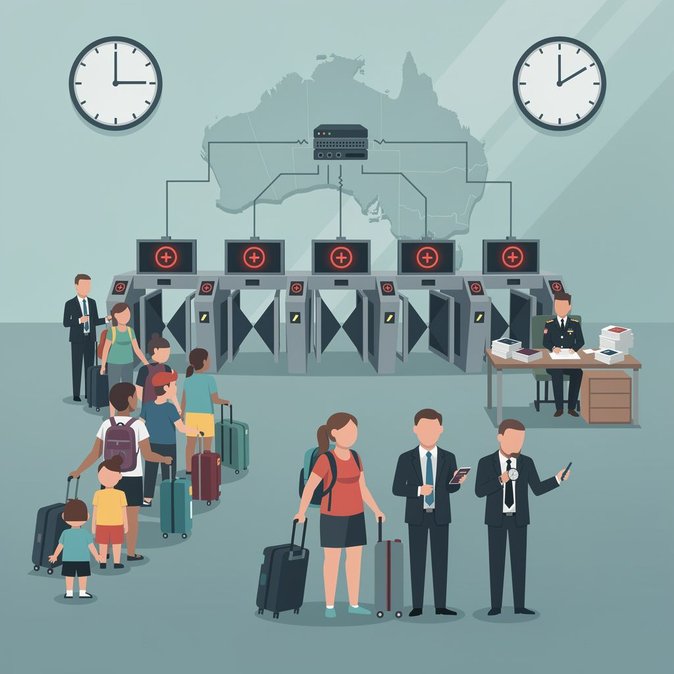
International travellers faced pre-pandemic-style queues on 19 September after Australia’s nationwide SmartGate network went dark for roughly 14 hours, paralysing automated passport control at the country’s three busiest gateways. According to reporting by RusTourism News, electronic gates at Sydney (SYD), Melbourne (MEL) and Brisbane (BNE) failed at about 21:00 Thursday and were not fully restored until shortly after 11:00 Friday. Australian Border Force (ABF) officers were rushed to immigration halls to process passengers manually. The outage hit just as Queensland and Victoria commenced their spring school-holiday break, a period during which Brisbane Airport alone expects a 6.1 % jump in international passenger volumes. The incident also embarrassed Brisbane, which had opened a new 12-lane passport-control hall only days earlier to boost throughput before the peak. While the root cause is still under investigation, aviation IT specialists told industry media that a synchronised failure across multiple airports points to a central backend vulnerability rather than a site-specific hardware fault. ABF confirmed the glitch but said no personal data were compromised. Operationally, airlines extended check-in cut-off times and waived change fees for missed onward connections. Corporate travel managers have advised staff to add at least 90 minutes of buffer to itineraries over the next fortnight in case of residual congestion or preventative maintenance shut-downs. The episode underscores the need for contingency staffing and for expanding the manual desk capacity that was mothballed as e-gates proliferated. For now, SmartGates are functioning normally, but ABF is conducting a post-incident review that could lead to staggered software roll-outs and additional on-site technicians during holiday peaks. Frequent flyers should keep boarding passes handy; officers may intermittently revert travellers to manual lanes while stress-testing system fixes.
Source: RusTourism News