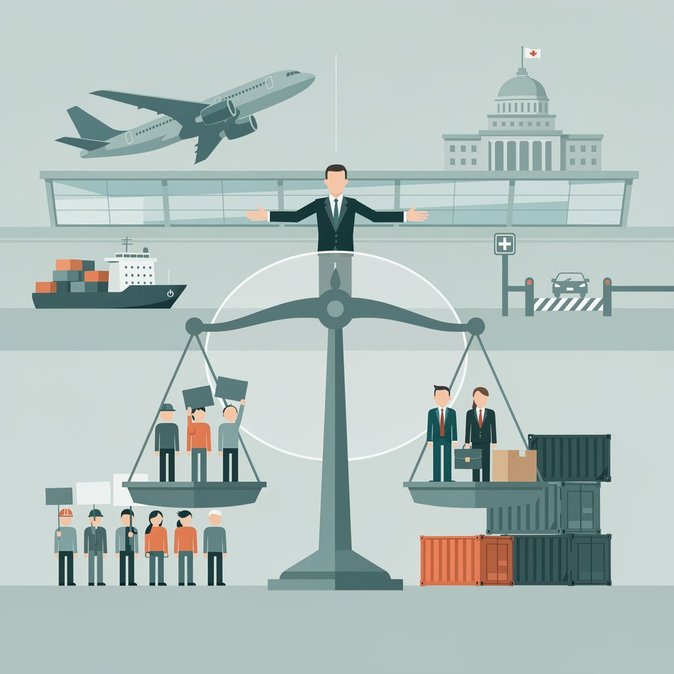
As Parliament reconvenes, the Liberal government is preparing legislation that would rewrite Section 107 of the Canada Labour Code – the clause that lets cabinet order binding arbitration to end strikes it deems economically harmful. Government House Leader Steven MacKinnon says the goal is “fewer last-minute crises” in federally regulated sectors such as air transport, ports, rail and border services. Section 107 has become notorious since Jobs Minister Patty Hajdu invoked it during last summer’s Air Canada flight-attendant walkout. Workers ignored the order and stayed out for three days, paralysing hundreds of flights and stranding thousands of travellers. Business coalitions have lobbied for clearer triggers that would allow Ottawa to step in before stoppages occur; organised labour calls the move a frontal attack on the right to strike. Under the draft amendments, a neutral special mediator would be appointed automatically once federally regulated talks reach an impasse. If the mediator certifies that a work stoppage would jeopardise “critical national infrastructure” – a term expected to cover airports, land borders, ports and major telecoms networks – the dispute could be referred to compulsory arbitration before picket lines go up. For corporate mobility managers, the change could be significant. In 2025 alone, strikes by airport security staff, railway engineers and CBSA officers forced multinationals to cancel leadership meetings and reroute overseas assignees at an estimated cost of C$240 million, according to the Canadian Travel & Tourism Roundtable. A faster mechanism to avert walkouts would reduce contingency budgeting and support predictable project timelines. Unions vow to fight the bill, warning it could slow wage growth in sectors already wrestling with staff shortages. The Canadian Labour Congress argues that expediting federal intervention will erode bargaining power and could provoke illegal wild-cat actions. Hearings before the House Standing Committee on Human Resources are expected later this fall, with the government aiming to have the new regime in force before the 2027 round of collective bargaining at the nation’s airports.
Source: Global News