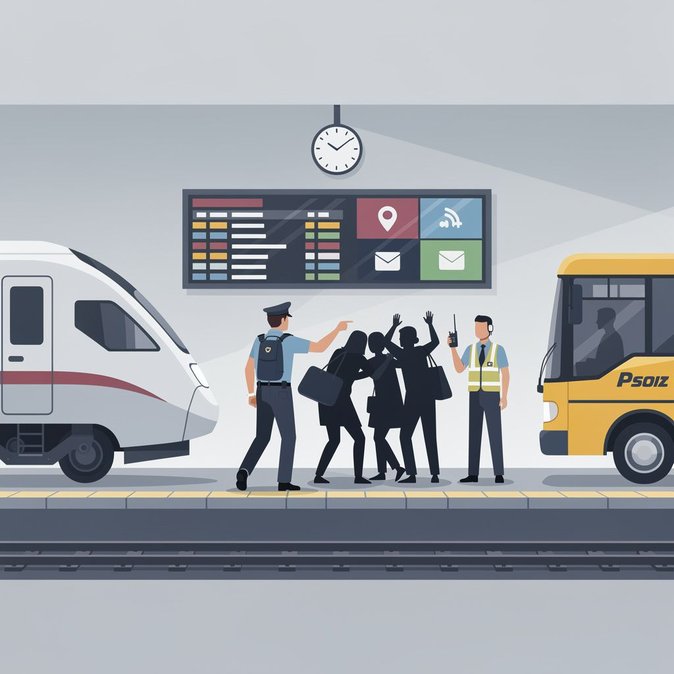
The Swiss Federal Railways (SBB) reported on 7 October 2026 that staff are facing around ten cases of verbal or physical abuse every working day, underscoring a worrying post-pandemic trend. Conductors filed 718 official complaints for violence or threats in 2025, and union representatives believe the true figure is higher because many employees avoid pressing charges to keep their names off court dockets. The problem is not confined to the rail network. Postal bus operator CarPostal logged 145 incidents in the first seven months of this year—more than double the total for all of 2025. Federal prosecutors note that offences against public officials jumped by roughly one-third during the same period, reflecting broader social tensions exacerbated by rising fares, service disruptions and lingering pandemic frustrations. For global-mobility and travel-risk managers the statistics translate into a concrete duty of care issue. Expatriate staff and business travellers frequently cite Switzerland’s public transport reliability as a key selling point. Increasing aggression towards front-line employees indicates that passengers may also encounter hostile situations—particularly on late-night services or routes popular with weekend revellers. Companies should revisit travel policies to include guidance on de-escalation and reporting. SBB is responding with body-cams, additional security patrols and an awareness campaign rolled out across main stations. Meanwhile, cantonal police forces are trialling joint mobile intervention units similar to those deployed in neighbouring Germany and France. Whether these measures can reverse the trend remains to be seen, but rail unions are already calling for tougher penalties and faster prosecution of offenders. The uptick in violence could also have indirect operational impacts. If conductor shortages rise due to burnout or safety concerns, SBB may need to adjust timetables—adding another variable for mobility planners already juggling construction-related line closures this autumn. Monitoring employee-safety data is therefore becoming as important as tracking punctuality.
Source: World Radio Switzerland