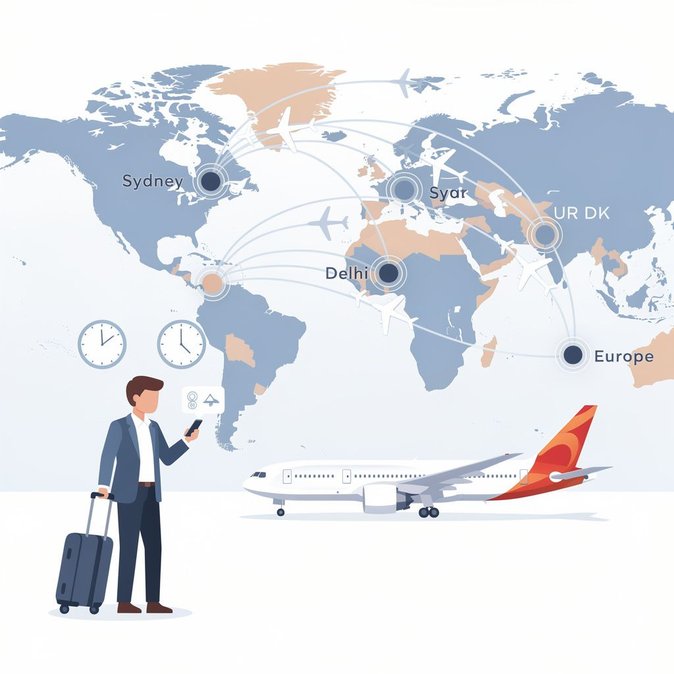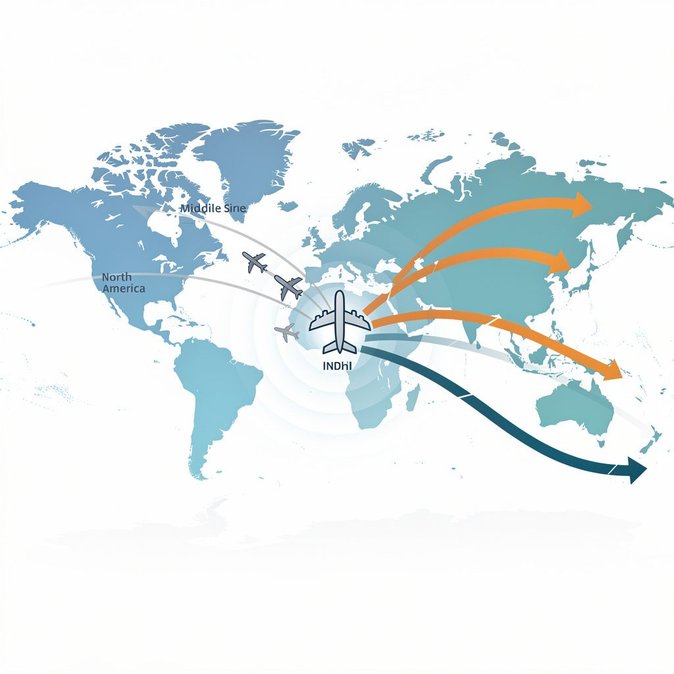
Geopolitical turbulence in West Asia is quietly redrawing India’s long-haul network. Statistics released by Delhi International Airport Ltd (DIAL) on 7 October 2026 reveal that Asia-Pacific passenger numbers grew 11.4 per cent year-on-year between April and August, even as traffic to the Middle East fell 4 per cent and North America plunged 26 per cent. With airlines avoiding certain airspaces and grappling with higher insurance premiums, carriers are redeploying capacity to markets such as Japan, Australia, Vietnam and even Mongolia. Philippine Airlines, EVA Air and Ural Airlines have already filed for winter slots, while Indian carriers are evaluating nonstop services to Tokyo and Melbourne using newly delivered A350s and 787-9s. For corporates this pivot means more one-stop options to Asia-Pacific hubs and, potentially, leaner connections to the United States. Travel-policy teams may need to revise approved routings and prepare for higher fares on surviving US sectors. Cargo planners should also note that belly-hold capacity is following the same trend, which could lengthen door-to-door times for samples and critical spare parts headed to North American plants. DIAL’s management believes the shift is structural rather than temporary, pointing to sustained visa-issuance backlogs for Indian students in the US and better slot availability in East Asia. Longer term, the data strengthens the case for India’s planned bilateral-air-service talks with Japan, Australia and New Zealand, which could unlock additional weekly seats and reciprocal traffic rights.
Source: Hindustan Times