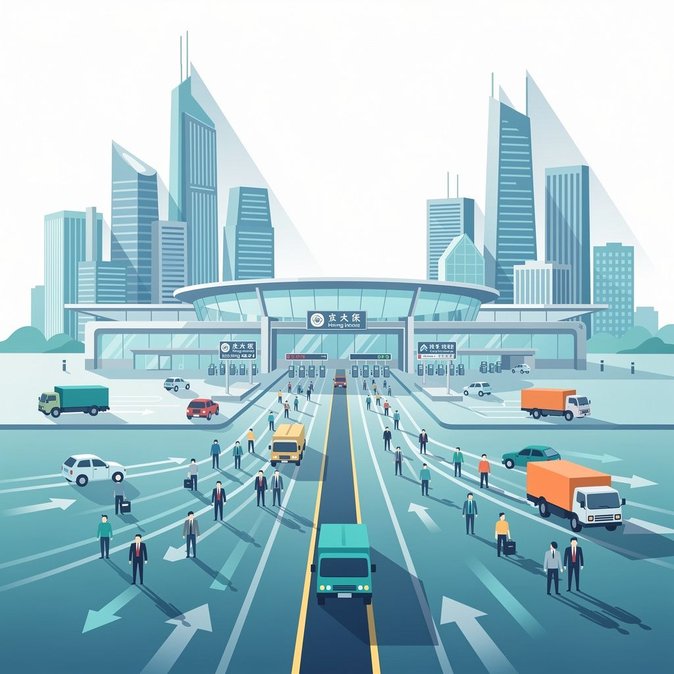
Hong Kong’s Legislative Council on Friday evening (17 July) passed the Huanggang Port Hong Kong Port Area Bill after a special four-hour debate, giving the SAR a legal framework to operate its portion of the brand-new land checkpoint under Hong Kong law. The 700,000-square-metre facility, which sits east of the current Lok Ma Chau/Futian crossing, will adopt a “collaborative inspection / one-stop clearance” model that allows travellers to complete Hong Kong and mainland immigration and customs formalities in a single hall in about five minutes. Under the bill, the Hong Kong Port Area will formally come under SAR jurisdiction at 00:00 on 31 July, following authorisation by the National People’s Congress Standing Committee and a State Council order that fixed the coordinates earlier this month. Contractors on both sides are finalising interior works while Hong Kong’s Transport Department has already tendered seven franchised bus routes, six green-minibus routes and multiple cross-boundary coach services to connect the port with urban districts once the exact opening date is agreed with Shenzhen. The Huanggang redevelopment is designed to handle up to 200,000 passenger trips and 15,000 vehicle movements each day, operating around the clock. Lawmakers hailed the arrangement as critical for easing congestion at other checkpoints, deepening Guangdong-Hong Kong-Macao Greater Bay Area integration and strengthening supply-chain resilience for high-value goods that rely on just-in-time delivery. During the debate, Security Secretary Chris Tang promised joint system testing, trial runs and emergency drills to ensure the port launches “as early as possible” without compromising data privacy or health-and-safety standards. For companies managing cross-border staff movement, the new checkpoint will shorten transfer times between Hong Kong International Airport and Shenzhen’s tech and manufacturing clusters to under an hour. Immigration advisers recommend that HR teams review existing shuttle contracts and employee travel policies to take advantage of the 24-hour clearance window and the forthcoming direct rail link now on the drawing board. They also note that the co-location model removes the need for double queuing, a perennial complaint among business travellers, thereby improving duty-of-care scores and productivity.
Source: China Daily Hong Kong