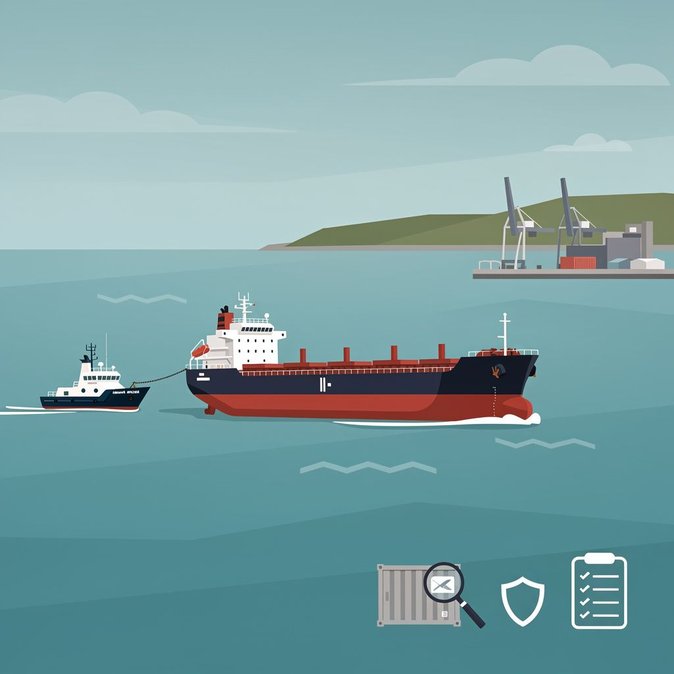
Revenue has confirmed that the Panamanian-flagged bulk carrier MV Matthew finally left the Port of Cork on 18 July 2026, ending an unprecedented 22-month detention that began when the Irish Joint Task Force—comprising Revenue Customs officers, An Garda Síochána, the Naval Service and Army Rangers—stormed the ship at sea in September 2023 and seized 2.2 tonnes of cocaine worth €157 million. Since the record seizure, the vessel has been held as criminal evidence while eight crew members and accomplices were tried and sentenced to prison terms of up to 20 years. Because no owner came forward, Revenue assumed responsibility for the 190-metre ship, spending about €17 million on safeguarding, insurance, port dues and specialist maintenance to prevent pollution and structural failure while complex legal and regulatory questions were resolved. After registering title with the Panama Maritime Authority in December 2025, Revenue negotiated the vessel’s sale—for a nominal US$1—to an international recycling company that has undertaken to tow the “dead ship” to Varna, Bulgaria under a single-voyage exemption. The decision avoids costly scrapping in Ireland and removes a large, uninsured hazard from Cork harbour, where draft restrictions and security cordons had complicated commercial traffic and cruise schedules. For global mobility managers, the episode is a reminder of the heightened customs scrutiny around Ireland’s ports and airports as the country steps up its contribution to EU-wide efforts against trans-Atlantic drug cartels. Revenue says it will redeploy resources freed up by the MV Matthew’s departure to operational intelligence work with MAOC-N, OLAF and Europol. Companies moving high-value or time-sensitive cargo through Irish gateways should therefore expect more frequent inspections and potential delays, and should ensure that shipping agents have comprehensive documentation and contingency plans. The case also illustrates Ireland’s willingness to exercise extraterritorial customs powers and to use asset forfeiture aggressively—trends that could have broader implications for vessels or aircraft implicated in sanctions breaches or illicit trade routes.
Source: Revenue – Press Release