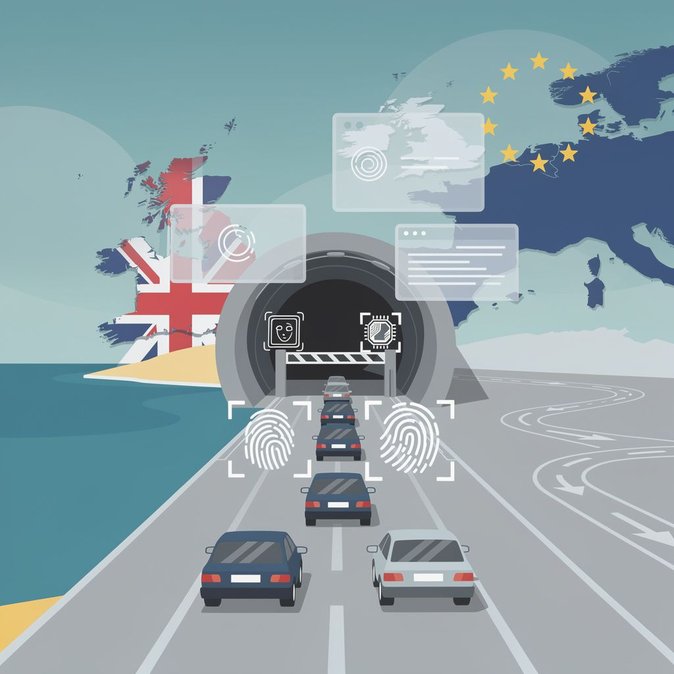
Channel Tunnel operator Getlink has sounded the alarm that critical software supplied by the European Commission for the new Entry/Exit System (EES) is still not stable enough to handle the mass rollout of car-passenger fingerprint and facial-image capture that is due to begin on 6 September. Speaking to reporters after releasing first-half results, chief executive Yann Leriche said the company can install kiosks, shelters and staffing "but we cannot write or fix the code that drives the whole process." Under the EES, every non-EU traveller crossing the Schengen external border must provide four fingerprints and a live facial image the first time they travel after the system goes live. For Britons driving to France or Belgium via Eurotunnel, that means submitting biometrics before boarding at Folkestone because juxtaposed French border controls are on UK soil. Getlink has already spent €100 million on a 225-kiosk processing zone, but Leriche warned that repeated test crashes and missing functionality could force authorities to delay the go-live date or to adopt a phased introduction. A postponement would be a relief to British holiday-makers and haulage operators who fear summer bottlenecks, but it would extend a period of uncertainty for travel businesses that have hired hundreds of extra staff and re-engineered traffic flows. If Brussels declines to push the date back, Leriche said Getlink might pursue legal action to recover costs, adding that "regulatory risk should not be carried solely by operators." Industry groups such as Airlines for Europe and the UK’s Border Trade Forum share the concerns, arguing that the EES was designed for airport e-gates rather than roll-on/roll-off traffic where space is limited, passengers stay in their vehicles and manual fallback procedures are slow. They want contingency rules allowing France’s frontier police to waive biometric capture during peak surges and let the data be taken on arrival instead. For corporate mobility managers, the real-world impact could be tighter check-in windows, new documentation requirements and possible service-level-agreement breaches on time-critical freight if the technology fails. Companies are being advised to build longer dwell times into driver routings, ensure that employee passports have at least two blank pages for entry stamps – which will continue in parallel with EES until EU-wide ETIAS travel authorisations launch next year – and to monitor further guidance from both UK and French authorities.
Source: Reuters