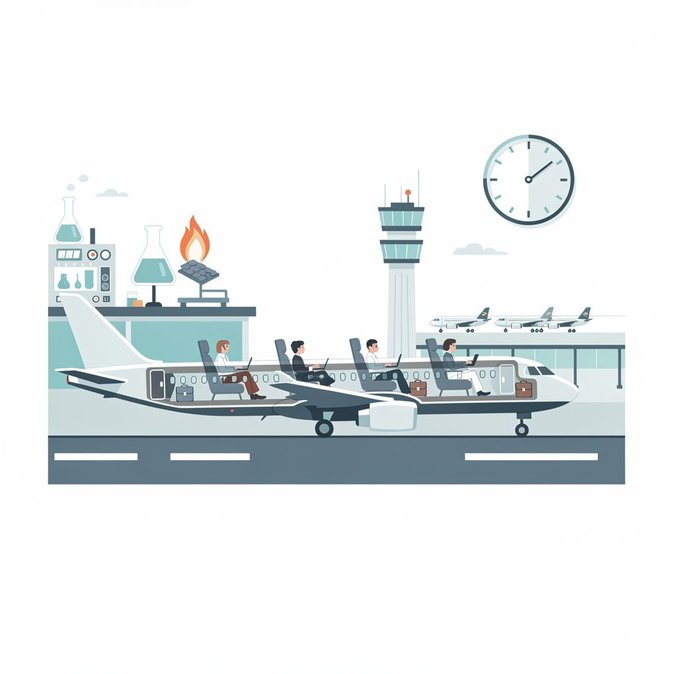
Brazil’s civil-aviation regulator ANAC published Portaria Regulatória 50/SAR in the *Diário Oficial da União* on 27 July, approving Supplementary Instruction 21.33-001A on flammability testing of cabin materials. The rule recognises accredited laboratories—whether in Brazil or listed by the US FAA—allowing airlines and maintenance, repair and overhaul (MRO) providers to certify interior modifications without prior ANAC approval. Why it matters for mobility: most Brazilian carriers are retrofitting cabins this year to add premium-economy seating and install low-power Bluetooth IFE. Being able to use foreign labs shortens maintenance downtime, which in turn should improve schedule reliability for business travellers during the August–December peak. International operators wet-leasing aircraft into Brazil for the summer season will also benefit from clearer reciprocity rules. The instruction sets out transition provisions and revises 2024 portarias that previously required each engineering order to be individually reviewed by ANAC’s Aeronautical Certification office. MRO specialists estimate paperwork lead-times will fall by 30–40 %, while carriers can consolidate multiple cabin changes into a single engineering package. Aircraft lessors welcomed the move, noting that harmonised standards reduce redelivery friction when aircraft cycle between LATAM and European operators. However, ANAC retains the right to audit labs and suspend recognition if quality lapses, so compliance teams must keep documentation in Portuguese and English. From a global-mobility standpoint, employers should see fewer last-minute flight cancellations linked to extended heavy checks, but technicians travelling on temporary visas must still be registered in the government’s Foreign Workers’ System (CTPS Digital) before performing on-wing tasks.