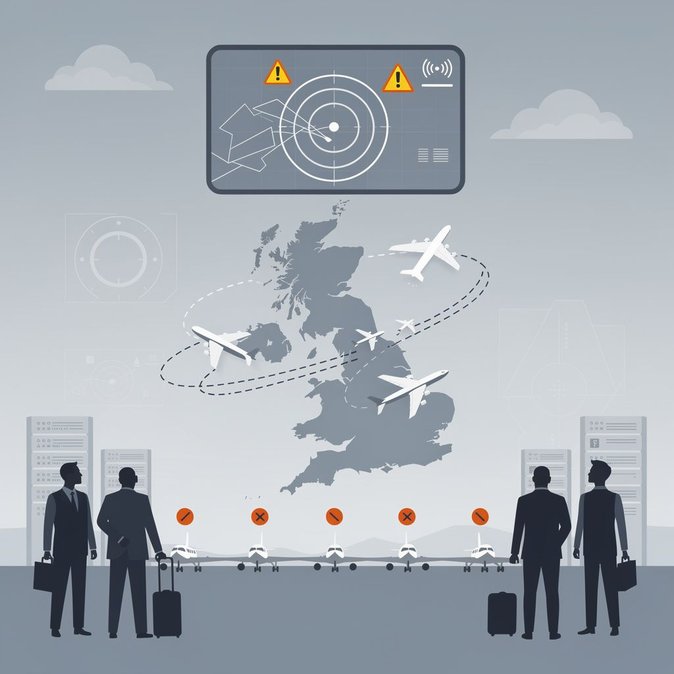
Just a fortnight after a software defect at National Air Traffic Services (NATS) paralysed British skies, a second outage struck the agency’s Prestwick control centre early on 22 September, forcing carriers to cancel roughly 200 of the day’s 6,000 scheduled flights. While NATS restored systems within two hours, aviation-data firm Cirium warned that “operational performance will degrade quickly” because aircraft and crews were already out of rotation from the earlier 8 September failure. Glasgow and Belfast recorded cancellation rates near 10 %, with ripple delays at Heathrow and Gatwick. NATS said the glitch was “unrelated” to the earlier incident that corrupted flight-plan data “in the space of a millisecond”. Nevertheless, industry groups are demanding an independent technical audit. Airlines UK estimates combined disruption costs from the two events exceed £60 million in extra fuel, passenger re-routing and crew overtime. The Civil Aviation Authority has launched an inquiry into whether NATS met its statutory resilience duties. For global-mobility teams the timing is awkward: corporate travellers are already facing tighter ETA checks at UK departure points, plus winter-schedule capacity cuts. Companies should advise assignees to book flexible fares, register for real-time alerts and allow longer connection windows, particularly when routing through regional airports that have thinner redundancy. The outages also raise questions about Britain’s move toward fully digital borders. Industry experts note that the same ‘Flight Plan Processing System’ that failed is integral to the interactive Advance Passenger Information (iAPI) feed used to verify eVisas and ETAs. Any repeat could strand travellers whose digital permissions fail to sync with airline departure control. Contingency plans—including manual boarding-card overrides authorised by the Border Force Carrier Support Hub—have been activated twice this month. Parliament’s Transport Select Committee has summoned NATS chief executive Martin Rolfe and aviation minister Baroness Vere for an evidence session on 29 September. Expect scrutiny of disaster-recovery protocols and calls for ring-fenced investment in backup datacentres—issues that directly affect the reliability of UK-bound business travel.
Source: Dawn (AFP wire)