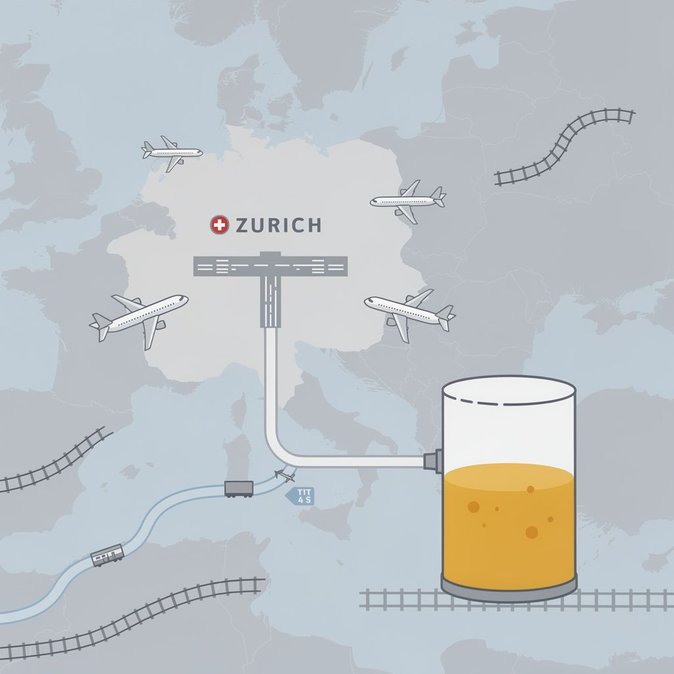
Switzerland’s Federal Office for National Economic Supply (FONES) has authorised the release of up to 30,000 m³ (around 30 million litres) of compulsory jet-fuel stocks between 15 October and 1 November 2026 after severe disruptions on Germany’s Rhine waterway and key north–south rail corridors threatened deliveries to Zurich Airport. The compulsory stockpile system – created after the 1970s oil crisis and financed via a levy on every litre of imported fuel – obliges Swiss importers to hold at least 4½ months of national consumption in bonded depots. Thursday’s decision allows the airport’s fuel consortium to draw down about 6.5 % of that buffer to keep aircraft refuelling operations running normally despite the logistical bottlenecks. According to FONES, unusually low water levels on the Rhine have forced barges to load at reduced capacity for weeks. Freight that would normally reach Zurich’s tank farms by river has therefore been diverted to rail, where several infrastructure failures in southern Germany have triggered cascading delays and cancellations. Airport operator Flughafen Zürich AG warned that without intervention a kerosene shortfall could emerge within days, jeopardising some 700 daily passenger and cargo flights. The temporary draw-down buys time for logistics providers to restore regular flows. It is the third time in a decade that Switzerland has unlocked aviation reserves, underscoring the vulnerability of land-locked supply chains. Airlines and ground-handling agents have been advised that fuelling limits or tanker bridging are not currently required, but contingency slot allocations remain on stand-by. Corporate travel managers should monitor uplift restrictions on feeder airports and build extra buffer into itineraries that rely on tight connections at Zurich. In parallel, the federal government has convened a task-force with Swiss Federal Railways (SBB Cargo), the Rhine Shipping Association and German infrastructure manager DB Netz to expedite rerouting options and to prioritise fuel trains through the Gotthard base tunnel. A post-crisis review is expected to examine whether a pipeline link from the Mediterranean could permanently diversify aviation-fuel imports.
Source: Watson.ch