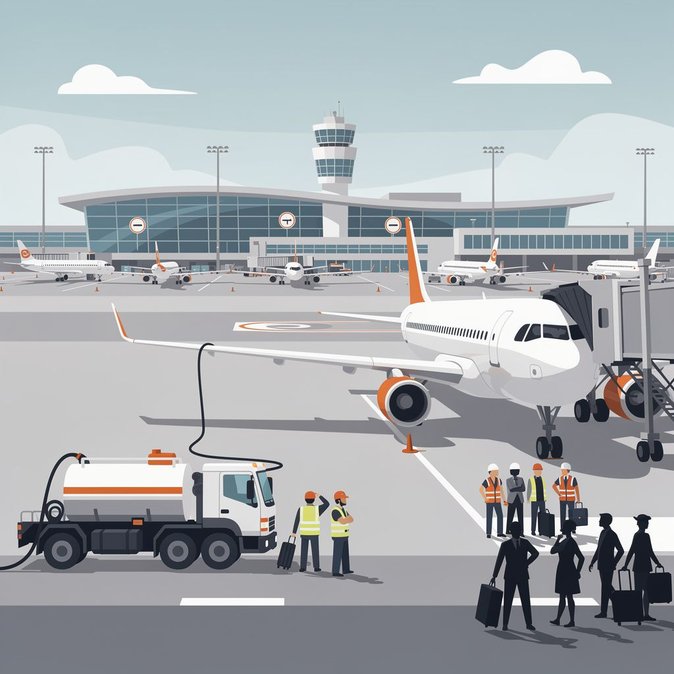
Unite-represented fuelling tanker drivers employed by Menzies Aviation at London Gatwick have begun a formal strike ballot over pay and overtime rules, International Airport Review reported on 24 July. The vote closes on 11 August; if members support walkouts, industrial action could begin in mid-August—right in the middle of the UK’s outbound holiday rush and the business-travel conference season. The dispute centres on claims that the new roster, introduced in April, results in excessive 12-hour shifts without guaranteed overtime premiums. Menzies says its offer mirrors deals accepted elsewhere and insists it can “maintain safe, continuous operations”. Unite counters that real-terms pay has fallen 6 % since 2024 and that rosters breach fatigue guidelines issued by the Civil Aviation Authority (CAA). Gatwick handles around 45 % of London’s short-haul traffic and is the primary departure point for many corporate shuttle routes to European financial centres. Any fuel-hydrant stoppage would force airlines either to tanker fuel from origin airports—raising weight and emissions—or to impose payload restrictions and cancellations. During a similar dispute at Heathrow in 2023, carriers cut schedules by up to 15 %. Business-travel managers should map critical routes, identify alternative airports such as London City or regional hubs, and prepare for ticket re-issue surcharges. Those operating private charters should secure refuelling slots early; the CAA has warned that ad-hoc fuel bowsers will be prioritised for scheduled services if resources become stretched. The ballot also highlights an emerging trend: while the Rail, Maritime & Transport (RMT) union dominates headlines, ground-handling and specialist airport roles are increasingly flexing industrial muscle. With Border Force rostering disputes still unresolved, the prospect of simultaneous strikes across different airport functions is a real scenario mobility planners must hedge against.
Source: International Airport Review