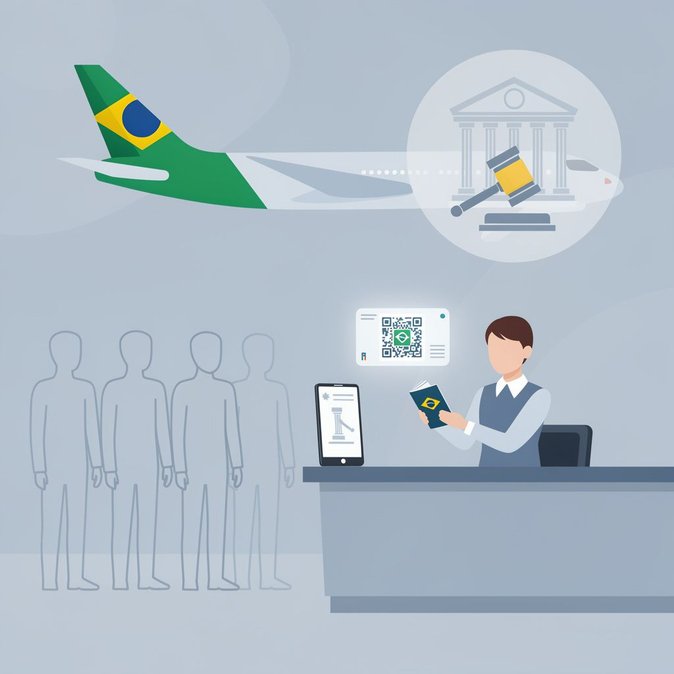
In a decision published on 25 September, Brazil’s Superior Tribunal de Justiça (STJ) reaffirmed that air carriers are strictly liable for fines incurred when they allow foreign passengers to board without the visas required under Brazilian law. The ruling—involving an unnamed airline appealing an administrative penalty—held that the sanction is compatible with both the 2017 Migration Law and long-standing international aviation norms. The court dismissed arguments that responsibility should pass to handling agents or that carriers could claim ‘good-faith’ reliance on passenger-supplied information. Instead, the justices cited Article 41 of the Chicago Convention and Brazil’s own Civil Aviation Code, which obligate airlines to verify travel documents at the point of origin. Fines are calculated in Unidade Fiscal de Referência (UFIR) and can reach R$ 10,000 per inadmissible traveller, plus repatriation costs. For mobility managers and travel-risk teams the precedent raises the stakes for compliance checks on complex multi-segment journeys. Carriers may tighten document-verification procedures, extend check-in cut-off times, or require digital copies of visas before issuing boarding passes. Multinational employers sending staff to Brazil on short notice—especially for offshore or project work—should build in extra lead time and ensure that electronic visa approvals are readily accessible on mobile devices. The ruling also has knock-on effects for Brazil’s new e-visa regime, effective 1 September 2026. Although digital visas are designed to simplify entry, any mismatch between the QR code and the traveller’s passport will still trigger carrier liability. Airlines are therefore expected to upgrade scanner technology and integrate with the foreign ministry’s visa-validation API once it becomes publicly available later this year. Finally, the judgment may influence discussions within Mercosur and LATAM airline groups about shared liability frameworks, potentially harmonising fines across the region—something corporate travel buyers should watch closely during contract negotiations.