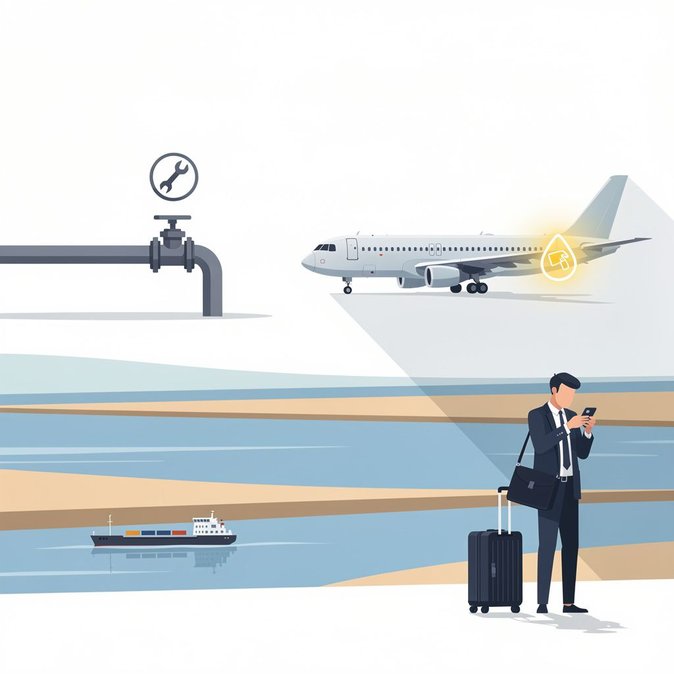
Frankfurt – Lufthansa has instructed crews on selected short-, medium- and now some long-haul services to load additional kerosene at departure airports in order to safeguard operations at its Frankfurt hub, Germany’s largest airport. The precaution follows a notification from pipeline operator TRM that maintenance work and low Rhine water levels could reduce fuel throughput for several days. In a statement on 15 October the airline said it does not expect flight cancellations but is mitigating risk by so-called tankering: aircraft take off with up to eight tonnes more fuel than required, reducing refuelling needs on arrival. Frankfurt airport operator Fraport confirmed the pipeline maintenance but emphasised that large on-site storage tanks and alternative delivery routes mean “overall operating capability is not impaired.” Corporate travel managers should nevertheless monitor connections that involve tight turn-arounds in Frankfurt. Extra fuel weight can affect payload; Lufthansa has asked load-planners to balance fuel uplift against passenger and cargo loads, potentially leading to last-minute off-loading of freight or stand-by passengers on highly-booked routes. Travellers connecting to Asian and North-American gateways should allow longer buffers. The incident spotlights energy-infrastructure vulnerabilities and the growing importance of supply-chain contingency planning for airlines. It also coincides with elevated geopolitical risks in the Middle East, prompting carriers to review alternative fuel-supply contracts at secondary German airports such as Munich and Berlin. Lufthansa indicated the measures would be phased out “within days” once normal pipeline pressure is restored. Mobility practitioners may take the episode as a reminder to integrate fuel-supply disruptions into risk assessments, alongside strikes and weather, when routing critical staff or time-sensitive cargo through Germany’s hubs.
Source: Tagesschau