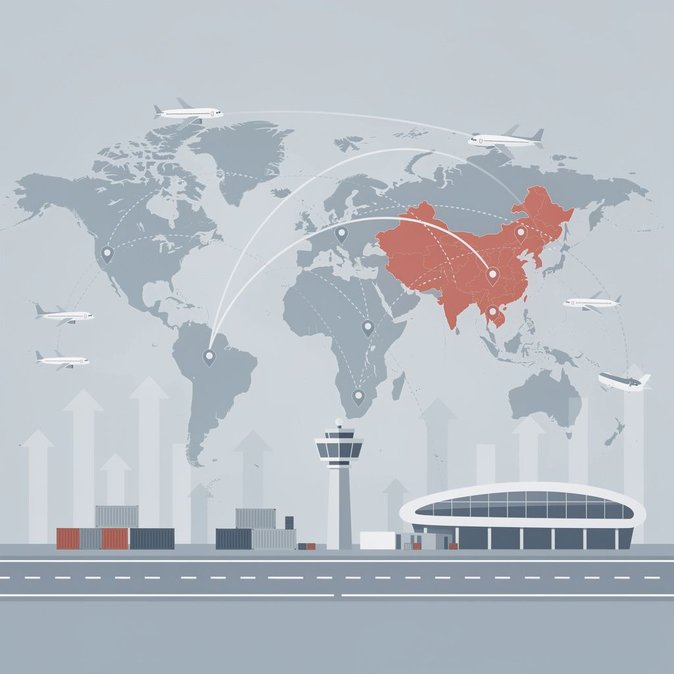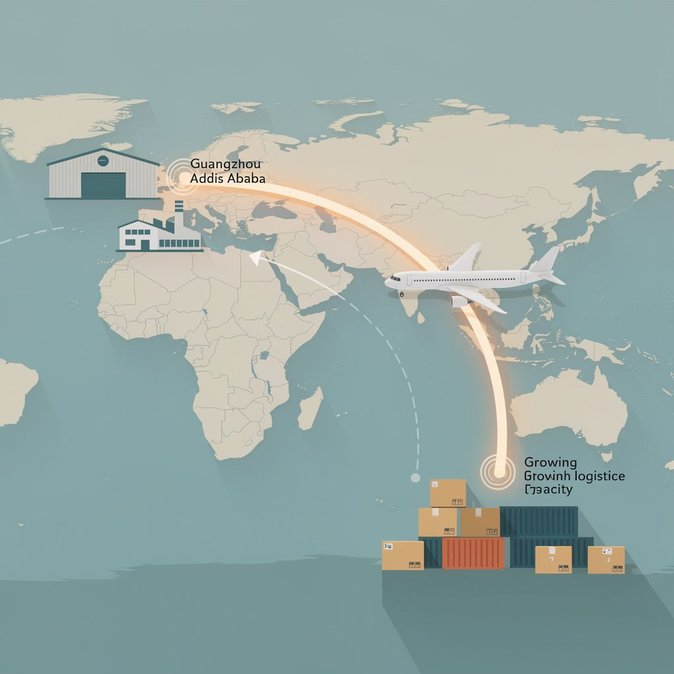
China Southern Air Logistics inaugurated its first dedicated all-cargo service to East Africa on 20 October, linking Guangzhou with Addis Ababa using a Boeing 777F configured for 100 tonnes of freight. The carrier said the twice-weekly service will be complemented by belly-hold capacity on the existing Guangzhou–Nairobi passenger route, lifting its total Africa lift by an estimated 18 % in Q4. For Chinese exporters of e-commerce parcels, electronics and photovoltaic components, the new route slashes transit times to Ethiopia’s Bole Airport to under 12 hours, down from 22 hours via Dubai. Onward trucking within the African Continental Free Trade Area means goods can now reach land-locked markets such as Uganda and Rwanda in two days instead of five, a boon for companies operating just-in-time assembly lines. The launch dovetails with Beijing’s ‘Air Silk Road’ initiative, which encourages Chinese carriers to open cargo corridors that match Belt and Road infrastructure projects. Addis Ababa’s freight volumes have surged 35 % year-to-date following completion of a Chinese-financed cold-chain warehouse that can handle 150,000 tonnes of perishables annually. The new China Southern flight will back-haul Ethiopian coffee and floriculture products to the Pearl River Delta, reinforcing two-way trade. Mobility professionals should note that the route also offers block-space agreements for human-remain repatriation and courier-to-hand options for high-value engineering parts. Visa-wise, Ethiopia’s e-visa portal continues to process Chinese national applications within 24 hours, but proof of a confirmed return flight is mandatory; the new frequencies make compliance easier. With African airfreight rates still 12 % above 2019 levels due to limited lift, shippers locking in allotments before the November-to-January peak season could realise savings of up to US $0.35 per kilo. HR and procurement teams supporting projects in the Horn of Africa should coordinate with freight forwarders to exploit the additional capacity and mitigate supply-chain risk.
Source: Ecns.cn