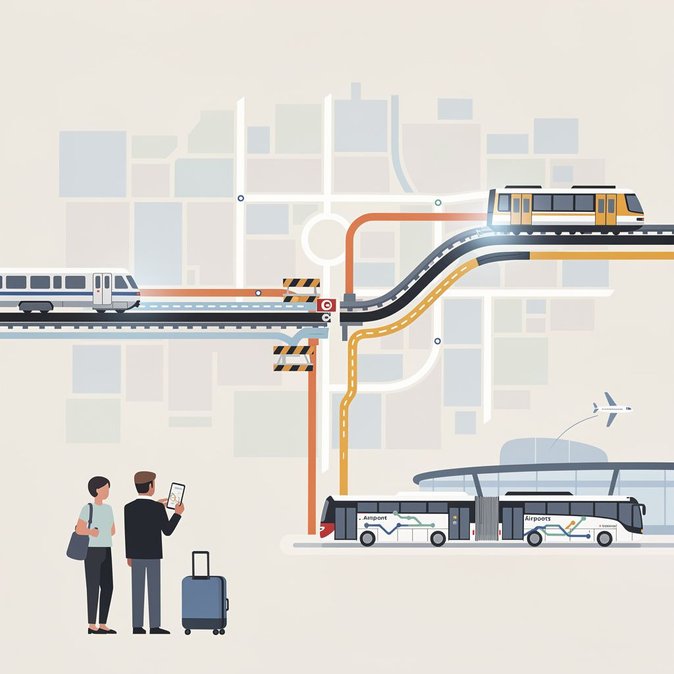
With the clock striking midnight on 18 September, the most radical rail closure Vienna has seen in decades swung into force: the complete shutdown of the S-Bahn Stammstrecke between Hauptbahnhof and Praterstern until October 2027. Motive power is the €1.2 billion modernisation of bridges, viaducts and stations that will eventually allow longer, higher-capacity trains. For the next 14 months, however, the city’s 100,000 daily S-Bahn users face detours and packed carriages elsewhere. Motoring association OEAMTC has produced a comprehensive guide to help passengers navigate the maze of substitute services. Key to the coping plan is the beefed-up Vienna Airport connection. Regional-express REX7 trains now run non-stop from Hauptbahnhof to Schwechat, long-distance Railjets continue as usual, and the City Airport Train (CAT) has been replaced by high-frequency ‘CAT by Bus’ coaches linking Wien Mitte and the terminals every 12 minutes during the day. ÖBB Postbus has added two new Vienna Airport Bus routes—VAB 4 from Karlsplatz and VAB 5 from Praterstern—aimed squarely at business travellers staying in the inner districts. Inside the city, U-Bahn lines U1, U2, U4 and U6 switch to sub-three-minute headways in peak periods, while tram lines O, 18 and 62 run more frequently and over extended routings. ÖBB and Wiener Linien have struck an agreement that allows holders of ÖBB tickets to ride specified metro and tram segments without extra charge, reducing the risk of fare disputes during the transition. OEAMTC recommends that commuters build at least 15 extra minutes into journeys, download the SCOTTY or WienMobil apps for real-time updates, and avoid carrying bicycles on the rail-replacement buses, where they are prohibited. Travellers with reduced mobility should pre-book ÖBB assistance 24 hours ahead to secure guaranteed boarding on shuttle buses. Although the closure is painful, transport economists note that Vienna learned valuable lessons from Berlin’s similar S-Bahn blockade in 2015 and has front-loaded capacity on alternative corridors. If the project stays on schedule, the city will emerge in late 2027 with a spine route able to handle 40 % more passengers—critical for keeping Austria’s capital attractive to international employers and conference organisers.
Source: ÖAMTC